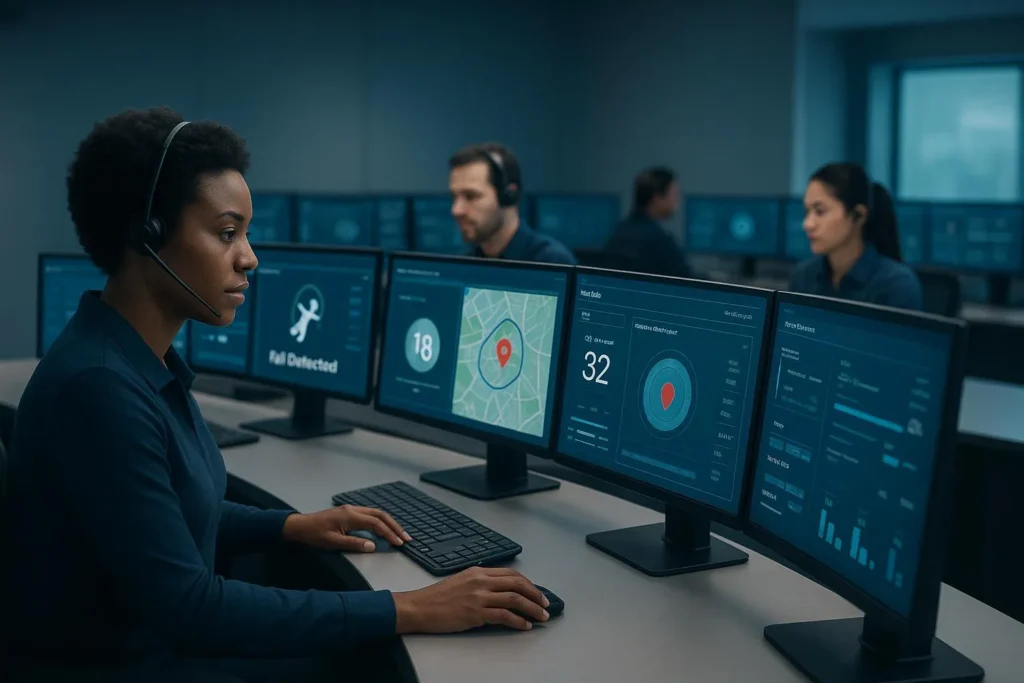
Modern alarm receiving centers (ARCs) and telecare providers don’t just need more alerts—they need faster, cleaner decisions. That’s where mobile personal emergency response systems (mPERS) make their operational case: they supply context that shortens handle times, improves first-call resolution, and trims the hidden costs of staffing and truck rolls.
This guide takes an operations-first lens. We focus on the workflows, integrations, and metrics that let monitoring leaders improve verification, reduce false alarms, and manage device fleets at scale—without resorting to unverified promises or hype.
What will you get here? Practical playbooks for intake-to-dispatch workflows, a measurement blueprint for proving impact, vendor-agnostic integration patterns, and procurement checkpoints tied to recognized standards—all tailored to mPERS for monitoring centers.
mPERS 101 for ARCs: Signals Operators Can Act On
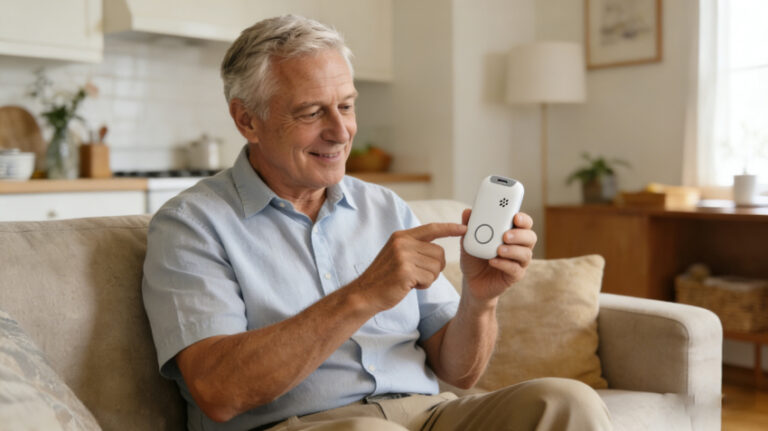
mPERS differ from “blind” alarms because they carry actionable context. For operators, five elements matter most:
- Event type: SOS press, fall detection, test, or low-battery.
- Location: GPS plus Wi‑Fi/BLE fusion with an uncertainty radius.
- Two-way voice: hands‑free talk‑through for rapid verification.
- Device state: battery percentage, firmware version, signal quality.
- Contacts and cancel windows: caregiver numbers and user-initiated cancel if safe.
Here’s an example of a neutral, machine-readable payload your platform might consume:
{
  "device_id": "EV1234567890",
  "event_type": "sos|fall|low_battery|test",
  "timestamp_utc": "2026-02-09T14:03:22Z",
  "location": {
    "lat": 37.4221,
    "lon": -122.0841,
    "uncertainty_m": 18,
    "sources": ["gps", "wifi", "ble"]
  },
  "fall_flag": true,
  "battery_pct": 21,
  "firmware": "v3.2.7",
  "network": {"rssi_dbm": -89, "bearer": "lte", "roaming": true},
  "user_cancel_window_s": 20,
  "care_contacts": [{"type": "primary", "name": "Caregiver A", "phone": "+1-555-0100"}],
  "webhook_retry": {"attempt": 1, "next_backoff_s": 60}
}
Think of this as the difference between a vague “ping” and a structured incident. Operators can triage faster because they see where the person is, whether a fall was detected, and if two‑way voice is available right now.
Why mPERS for Monitoring Centers Change Verification
UL 827 and similar frameworks push ARCs toward always‑on availability and procedural rigor, but what transforms day‑to‑day performance is verification context inside each event. When alarms include location, a fall flag, device health, and immediate talk‑through, operators can prioritize confidently, reduce unnecessary escalations, and move more events to first-call resolution.
For risk-based verification models, many centers look to the industry’s AVS‑01 framework for alarm validation semantics. While originally focused on security alarms, its tiered approach to “no call” through high‑credibility events maps well to mPERS-style decisioning. For background on AVS‑01 certification, see the program overview from UL in the article on the ANSI/TMA AVS‑01 certification program: UL’s AVS‑01 certification program.
Alarm-Handling Workflows That Move the Needle
High-performing mPERS workflows are predictable, measurable, and simple for operators to execute under pressure. A common pattern runs from intake, to verification with two-way voice and parallel caregiver contact, to resolution/dispatch, and finally post-processing with QA on outliers. Each step can influence key KPIs when executed consistently.
| Workflow step | How it reduces handle time (OHT) | How it improves FCR | How it lowers false alarms |
|---|---|---|---|
| Intake normalization | Operators don’t waste time reconciling formats; history is surfaced | Prior events inform scripts | Fewer misroutes from malformed data |
| Two-way voice first | Direct confirmation ends the call quickly when safe | Many events resolved in the first cycle | Avoids unnecessary dispatch when user is okay |
| Parallel caregiver call | Reaches someone if the user can’t speak | Faster confirmation without second attempts | Caregivers cancel non-emergencies |
| Context-led dispatch | Location/fall flag supports confident decisions | Reduces callbacks to confirm details | Minimizes false dispatches due to ambiguity |
| QA on outliers | Training targets real bottlenecks | Scripts evolve to close more on first call | Pattern fixes cut systemic false triggers |
False Alarm Reduction Tactics That Actually Work
A significant share of machine‑generated alerts (especially auto fall detection) can be non‑actionable without context. What reliably helps?
- Calibrate fall sensitivity by profile and enable a short cancel window so users can dismiss obvious non‑events.
- Use location fusion (GPS + Wi‑Fi + BLE) to confirm indoor vs. outdoor context and filter geofence noise.
- Coach operators on concise verification scripts and empower them to classify events consistently.
- Sample QA of long-handle-time calls and adjust SOPs where misclassification recurs.
Industry reporting in security monitoring shows why verification matters. For example, Parks Associates (2025) describes how cloud AI video analytics dramatically reduce unnecessary alerts and improve monitoring scalability—directional evidence that verification and context cut noise and operator load. See the discussion on cloud AI reducing unnecessary alerts in Parks Associates’ blog: Cloud AI video solutions reduce unnecessary alerts and improve monitoring scalability.
Integrations and Interoperability: What “Good” Looks Like
Even when platforms use proprietary APIs, the integration goals are similar:
- Message schema: device ID, event type, timestamps, location with uncertainty, fall flag, battery, firmware, and contact list.
- Delivery semantics: idempotent webhooks or streams, ack/retry with backoff, and signed requests.
- Downstream handoff: where supported, digital handoff to public safety via ASAP‑to‑PSAP removes manual reentry and shaves minutes from dispatch time. The program overview highlights average 1–3 minute response improvements; explore details at the program site: ASAP‑to‑PSAP program overview.
- Security: mutual TLS, key rotation, and audit logs; align device operations with IoT security baselines.
Device Lifecycle and TCO: Operate the Fleet, Not Just the Alarm
mPERS success at scale depends on the “boring” work: configuration hygiene, firmware updates, SIM plans, and remote diagnostics. Here’s the operational core:
- FOTA with staged cohorts and rollback to minimize risk and truck rolls.
- SIM management: roaming profiles, APN changes, and data plan monitoring.
- Remote diagnostics and health telemetry: battery, signal quality, firmware, and error logs.
- Inventory/RMA loops: track SKUs, failures, and warranty trends to inform purchasing.
We avoid hard ROI percentages because neutral, mPERS‑specific public data remains scarce. Instead, tie these practices to the measurement blueprint below and let your own data quantify savings in operator hours and site visits.
Measurement Blueprint for Operations Leaders
Want confidence without guesswork? Instrument your service and publish the deltas.
- Metrics to track
- False alarm rate (FAR): alarms not requiring dispatch ÷ total alarms; track separately from false dispatch rate.
- First‑call resolution (FCR): percentage resolved in the initial contact cycle.
- Operator handle time (OHT): operator pickup to resolution/dispatch, using medians.
- Dispatch time delta: with vs. without verification context.
- Adoption/retention: 90‑day activation; 12‑month retention; reasons for churn.
- Staffing efficiency: operator hours per 1,000 active devices; alerts per operator‑hour.
- Study design
- Use phased rollouts or A/B cohorts (baseline 2–3 months; post 3–6 months).
- Tag events by verification tier (AVS‑01‑like semantics) and capture device health fields to correlate with outcomes.
- Pre‑register dashboards and audit monthly to curb bias.
- Reporting
- Share anonymized dashboards quarterly; include confidence intervals, time windows, and SOP/firmware version notes.
Platform Enablers: A Neutral View (With One Disclosure)
Most mature mPERS solutions offer similar building blocks—multi‑bearer location (GPS/Wi‑Fi/BLE), hands‑free two‑way voice, configurable fall detection with cancel windows, remote configuration, and secure FOTA. These capabilities support the workflows and KPIs discussed above; they don’t pre‑ordain outcomes without good SOPs and training.
Disclosure: Eview is our product. As a practical example of such capabilities, see the overview of mPERS wearables and device management on the site’s public pages, such as the pages on smart wearables and app/platform management: Eview. Use parity criteria when evaluating any vendor: protocol openness, voice quality, battery safety and endurance, FOTA maturity with rollback, SIM/roaming options, API documentation, and available certifications. For a concise starting point, you can review the smart wearables overview page.
Procurement and Compliance Checkpoints
Operational excellence benefits from clear guardrails. During procurement and audits, ensure your partners and internal SOPs align with recognized standards and their practical implications.
- UL 827 (central station services): staffing, redundancy, power, and procedural rigor that shape SLAs and disaster recovery testing. For a concise program overview, reference UL’s explainer on AVS‑01 certification above and consult UL 827 summaries from recognized testing bodies such as Intertek’s UL 827 overview: UL 827 standard overview from Intertek.
- EN 50136 (alarm transmission systems): performance/availability classes that inform transmission path supervision and ARC receiver design.
- ETSI EN 303 645 (+ testing specs): baseline IoT security—unique credentials, signed updates, recovery behavior, privacy controls—crucial for secure FOTA and remote management.
Define verification tiers in SOPs, set SLAs from signal receipt to operator pickup, schedule failover tests, and enforce secure configuration and access control for device ops.
Closing: The Operational Case for mPERS
Here’s the deal: mPERS for monitoring centers earn their keep when they feed operators the right context at the right moment—and when your SOPs, integrations, and training are tuned to use it. Equip your platform with clear schemas, streamline verification, invest in fleet operations, and measure what matters. What would your first dashboard show if you tagged every event by verification tier starting tomorrow?