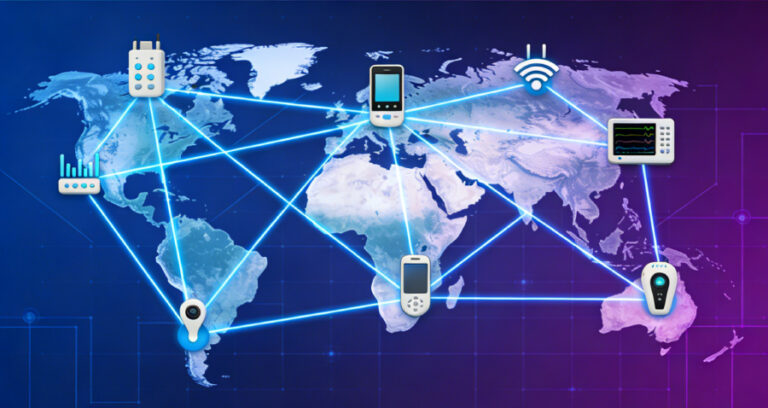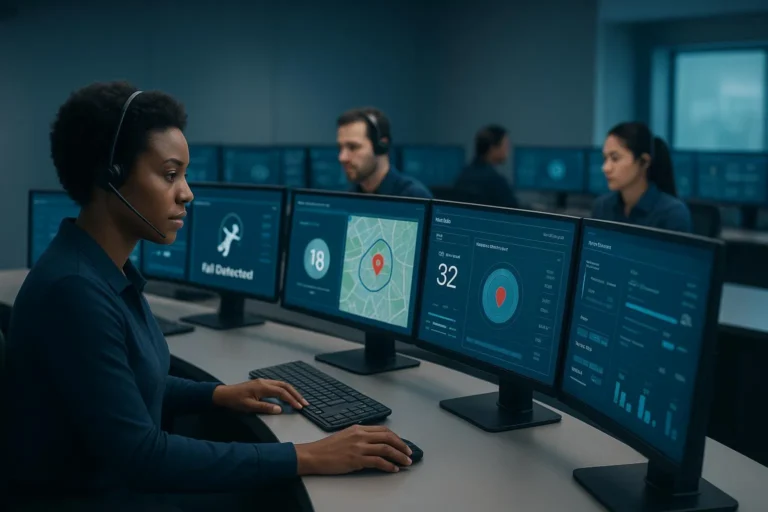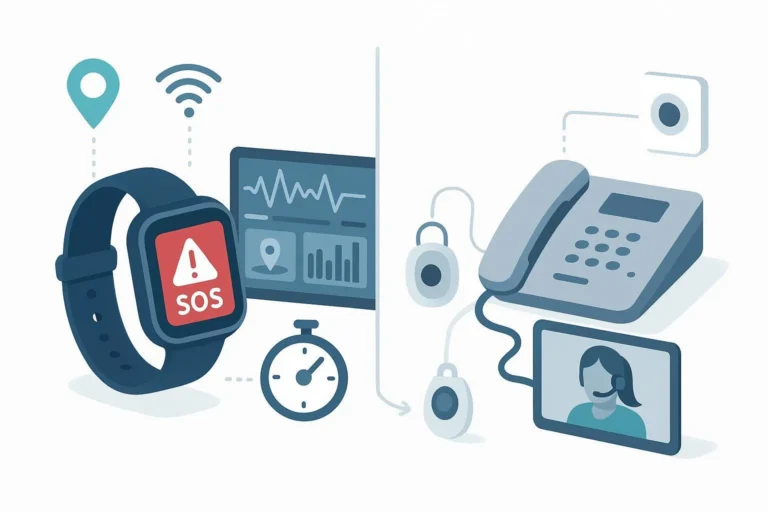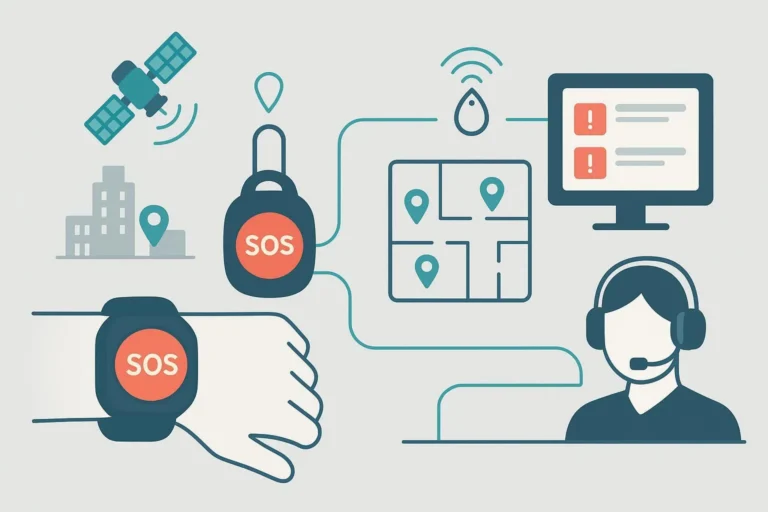
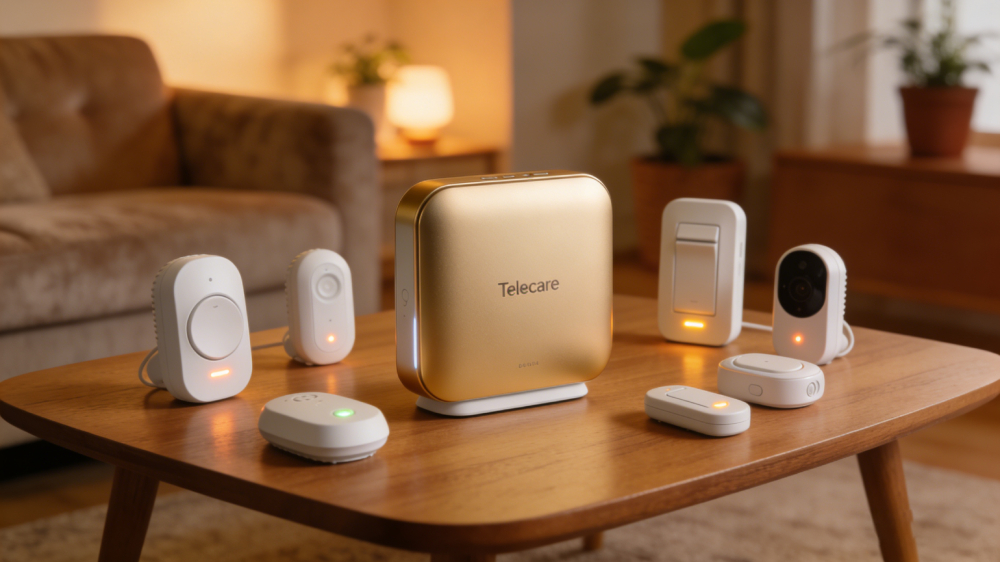
As the demand for aging-in-place and remote health monitoring grows across Europe and North America, the telecare home hub has become the central nervous system of connected care. It bridges smart sensors, real-time alerts, and automated workflows—turning fragmented home devices into a unified telecare system. This transformation enables faster intervention, better data flow, and measurable care outcomes.
Why a telecare home hub is now the new “front door” to care
Modern telecare no longer starts in a call center—it starts in the home.
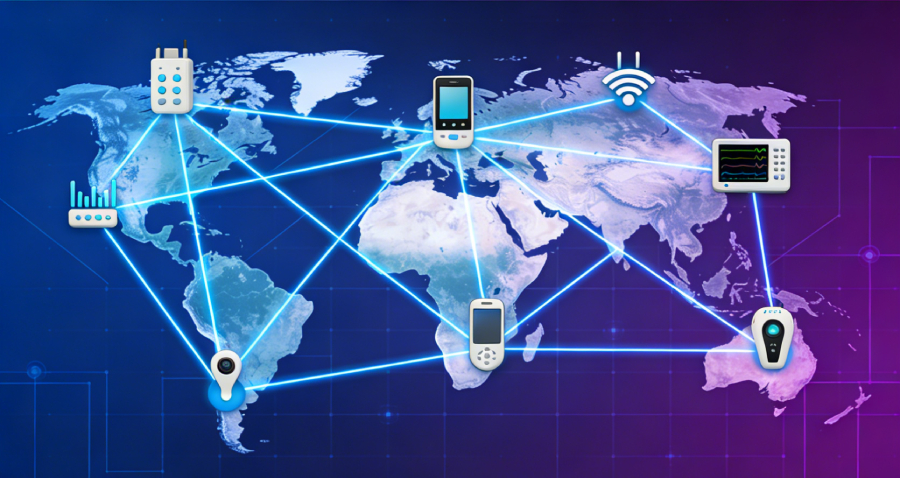
A home hub connects motion, bed, fall, and door sensors to a secure cloud service that continuously evaluates activity patterns. Acting as the “front door” of digital care, the hub maintains constant communication between users, caregivers, and monitoring centers.
What a hub actually does
At its core, a telecare home hub serves as an intelligent gateway that collects sensor data, triggers two-way voice alerts, and routes verified incidents to care teams. Unlike single-function devices, the hub manages multiple communication protocols (Wi-Fi, Zigbee, BLE), ensuring that every signal—whether from a fall detector or a door sensor—reaches the right responder instantly.
The shift from reactive to proactive care
Traditional telecare systems were reactive, waiting for an alarm. Today’s home hubs analyze behavior trends to identify potential risks—sleep pattern changes, reduced movement, or missed medication events—long before an emergency occurs. This shift from reactive alarms to predictive telecare represents a significant improvement in both quality and cost-effectiveness.
What the evidence says
Recent research from NIHR Open Research (2025) found that telecare sensors enhanced independence and reduced emergency visits when combined with consistent workflows and skilled staff. The study emphasized that technology alone is not enough—success depends on dependable hardware, data reliability, and cross-team collaboration.
The sensor layer: what to connect first
To maximize reliability and insight, start by connecting essential smart care sensors through your home hub. These form the foundation for meaningful behavioral analytics.
Core sensors for a telecare home hub
A balanced telecare network includes motion sensors in key rooms, bed occupancy sensors for night-time monitoring, door and window contacts, bathroom humidity or presence detectors, and stove/temperature monitors. These devices build a baseline of normal activity—allowing the telecare system to identify deviations that may signal early health risks.
Why protocols matter
According to home automation research from Softobotics, most smart home hubs rely on Wi-Fi for data-intensive tasks and Zigbee or BLE for low-power sensors. This hybrid model ensures both battery efficiency and stable connectivity. For telecare, that translates into continuous uptime and fewer false alerts.

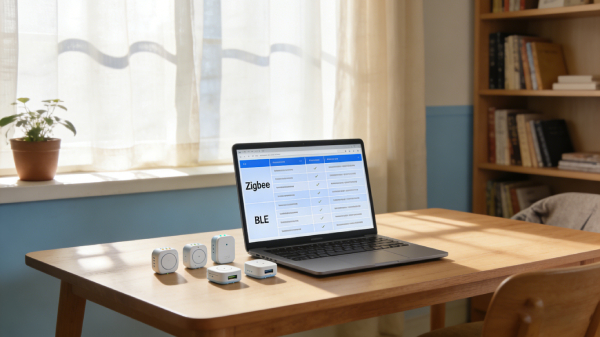
Connectivity choices for reliability (Zigbee vs BLE at a glance)
When building or specifying a telecare home hub, selecting the right communication protocol is vital for system uptime.
What each protocol is good at
Zigbee’s mesh architecture supports stable coverage across the entire home, making it ideal for fixed sensors like bed mats or motion detectors. BLE, on the other hand, is perfect for wearables or temporary devices that pair via smartphone apps.
For care providers, this means: Zigbee for home infrastructure, BLE for mobility and personal safety.
Comparison table
| Attribute | Zigbee | Bluetooth Low Energy (BLE) |
|---|---|---|
| Typical range | 10–100 m (mesh capable) | ~10 m (point-to-point) |
| Data rate | Up to 250 kbps | Up to 2 Mbps |
| Ideal use | Fixed ambient sensors | Wearables, mobile PERS |
| Power use | Very low | Moderate |
| Benefit | Reliable mesh, long life | Easy pairing, mobile link |
Both technologies are now standard across Eview’s telecare hub portfolio, ensuring interoperability with existing sensors and faster integration into partner ecosystems.

From signals to sense-making: alert logic that reduces noise
A reliable telecare system is not about collecting more data—it’s about interpreting it correctly. This is where alert intelligence and workflow automation come in.
Thresholds, patterns, and confidence
Smart hubs use multi-sensor fusion and context logic to avoid false positives. For example, an inactive motion sensor might be cross-checked with bed occupancy or temperature data before triggering an alarm. By assigning confidence scores and pattern recognition, the system filters noise and highlights genuine risks.
Two-way voice as a first verification
The human element remains essential. Two-way voice verification allows responders to speak directly with the user within seconds. Industry benchmarks show that two-way voice alerts can resolve up to 70% of events without dispatch, saving time and anxiety.
Eview’s hubs integrate full-duplex audio and noise suppression, ensuring clear communication even in emergencies.
Who gets alerted—and how escalation should work
A well-structured alert workflow defines who is notified, how, and when. Without it, even advanced sensors can create chaos.
A clean routing model
An effective escalation chain follows a three-tier logic:
- Notify the user via local alert or two-way voice.
- Escalate to family or designated caregiver via mobile app.
- Forward critical cases to a professional monitoring center or EMS.
Every step is logged for compliance and performance review.
Family reassurance without overload
Caregivers often experience “alert fatigue.” A modern telecare home hub allows configurable thresholds, quiet hours, and digest summaries to balance safety with peace of mind. This is a hallmark of well-designed telecare workflows—clear, actionable alerts that promote trust.
What “proactive” really looks like in home care
The promise of telecare lies in prevention, not reaction. Proactive telecare systems analyze continuous data to forecast deterioration and trigger early interventions.
From events to early warnings
Patterns such as reduced nighttime sleep, slower mobility, or frequent bathroom visits can indicate infection, pain, or fall risk. Predictive alerts derived from these changes help care providers schedule timely visits—avoiding hospitalizations and costs.
Evidence and reality check
Clinical pilots and council reports confirm that telecare home hubs improve outcomes only when paired with robust service models. Workforce training, clear escalation rules, and technical support are as critical as the sensors themselves.

The business case: why falls data belongs in your hub plan
Beyond clinical benefits, fall detection remains one of the strongest ROI arguments for telecare deployment.
The scale of the problem
According to the U.S. CDC, older-adult falls result in roughly 3 million emergency visits and 1 million hospitalizations annually. Integrating fall data into your telecare home hub enables earlier interventions, reducing hospital strain and insurance costs.
Table: US older-adult falls (reference points)
| Metric | Value | Source |
|---|---|---|
| Annual ED visits (65+) | ~3,000,000 | CDC |
| Annual hospitalizations | ~1,000,000 | CDC |
| Fall death rate (2023) | 69.9 per 100,000 | CDC |
A well-integrated fall sensor workflow can directly demonstrate cost savings and improve public-health metrics.
Implementation lessons from councils and providers
Deploying a telecare home hub at scale involves more than buying hardware. Successful providers focus on process, governance, and measurement.
Don’t stop at pilots
UK councils and healthcare organizations often pilot innovative care tech but struggle to scale due to unclear business models or integration gaps. The ADASS/TSA blueprint highlights the need for operational frameworks, funding logic, and shared accountability.
Build the wrap-around
To sustain adoption, define roles: who monitors dashboards, who responds, and who maintains devices. Add data governance protocols, consent forms, and cross-team communication plans. Eview partners with agencies to build these frameworks, supporting end-to-end telecare workflows rather than isolated trials.
Integration patterns that speed time-to-value
Even the most advanced telecare system fails without a clear integration roadmap.
Start with events, then enrich
A phased approach works best:
- Connect sensors and enable basic event alerts.
- Add pattern recognition and escalation routing.
- Integrate with EHR or case-management systems.
Each phase delivers measurable outcomes—improving ROI visibility for stakeholders.
Two-way voice and mPERS, together
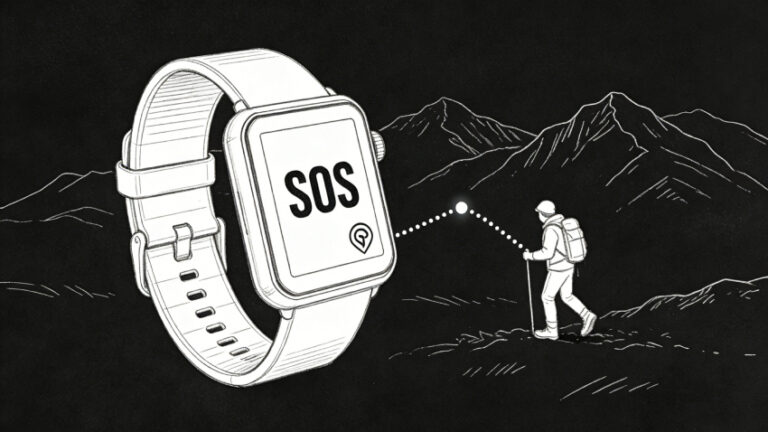
Combining mobile personal emergency response systems (mPERS) with fixed hubs extends safety coverage beyond the home. Unified routing ensures the same care logic applies whether a fall happens in the living room or outdoors.
Eview’s hybrid hub + mPERS model exemplifies this integration, providing seamless telecare continuity across environments.
Data privacy, consent, and governance
As data volume grows, so do privacy concerns. In the EU and the US, GDPR and HIPAA demand transparency and consent in remote monitoring.
Keep consent specific and revocable
Users must understand what is tracked—motion, temperature, or sleep—and retain the right to pause or delete data. Transparent privacy dashboards within caregiver apps enhance trust and adoption.
Document data paths
Every telecare system should map its data flow: sensor → hub → cloud → care portal → monitoring center. Defining retention periods and access rights ensures compliance and facilitates integration with public-sector partners.
What good looks like: a reference workflow
To visualize how it all connects, let’s consider a model telecare workflow.
Telecare home hub workflow (baseline)
- Sensor detects anomaly (e.g., no movement).
- Hub verifies via cross-sensor data and rules.
- Two-way voice check initiated.
- If unanswered, alert routed to caregiver app.
- If critical, escalated to the monitoring center or EMS.
- Case automatically logged for audit.
Service KPIs to track
- Alarm verification time
- Resolution via voice (%)
- False-alarm rate
- Time-to-contact
- Avoided ER visits
These metrics help agencies prove the effectiveness of their telecare service automation strategy.
Why Eview for OEM/ODM telecare hubs
In a fragmented market, selecting the right hardware partner is crucial.
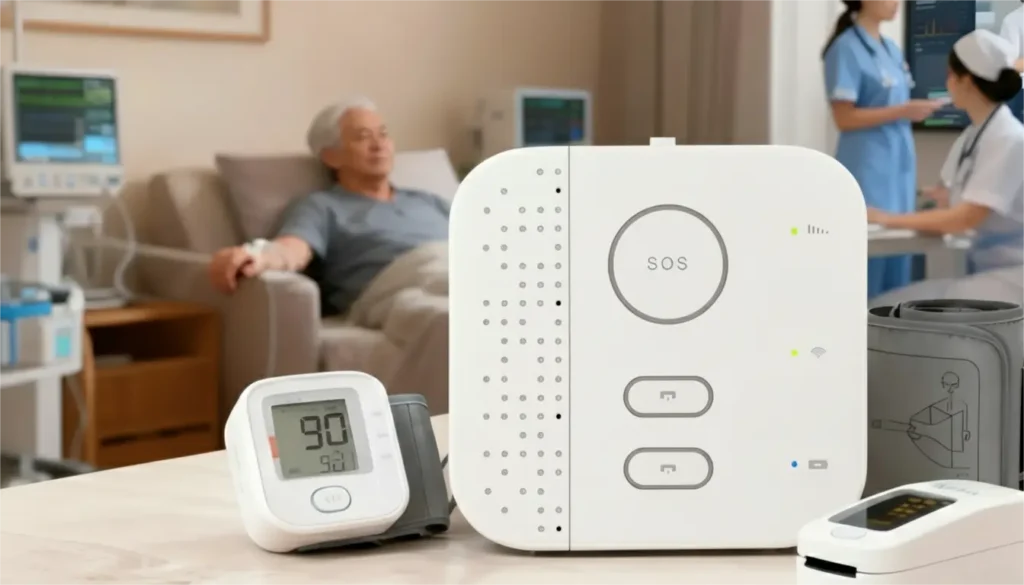
Eview designs telecare home hubs engineered for reliability, voice clarity, and open protocol support—ideal for partners building scalable remote-care ecosystems.
Practical hardware for real homes
Eview’s hubs support Wi-Fi, BLE, and Zigbee connectivity, built with medical-grade microphones and optimized antennas for continuous uptime. Engineering teams assist OEM/ODM clients with firmware customization and integration to reduce time-to-market.
Built for partners, not pilots
Eview focuses on scalable manufacturing and lifecycle support—ensuring consistent supply, API compatibility, and firmware updates that align with care-industry compliance. For B2B clients, that translates into lower operational risk and faster deployment.
Conclusion
A telecare home hub transforms digital health from device silos into connected, proactive care. When sensors, alerts, and workflows operate through a unified platform, response time drops, data quality improves, and both families and professionals gain confidence.
For healthcare providers, system integrators, and municipal care networks, the path forward is clear: invest in reliable hardware, intelligent software, and well-designed workflows.
Eview’s approach—engineering-grade hubs with open protocols and partner-centric support—demonstrates how dependable technology can make telecare truly scalable across Europe and North America.
FAQ: Telecare Home Hub
What is the difference between a telecare home hub and a smart home hub?
A telecare home hub connects healthcare sensors (motion, bed occupancy, falls) and provides two-way voice alerts for emergency response. In contrast, a smart home hub primarily controls home automation devices like lighting and temperature.
Can we start using a telecare system without wearables?
Yes, telecare systems can function effectively with basic sensors (motion, door, bed) without wearables. Wearables can be added later for tracking vitals and mobility.
Who gets notified first—family or the monitoring center?
Alerts can be routed to family members first, with critical events escalating to a monitoring center or EMS. Custom workflows allow for flexibility based on event severity.
How do hubs minimize false alarms?
Using sensor fusion and two-way voice verification, a telecare home hub cross-checks multiple sensors to reduce false alarms and ensure timely, accurate responses.
Are bathroom and bedroom sensors private?
Yes, non-camera sensors (motion, weight) ensure privacy while monitoring sensitive areas like bathrooms and bedrooms. Users can control data flow and consent settings for transparency.
How quickly can we deploy a telecare system?
Telecare home hubs can be deployed in phases, starting with basic sensors and alerts. Integration with additional features (e.g., health data, two-way alerts) can be done gradually.