4G, LTE-M, and NB-IoT Explained: Choosing the Right Network for Your mPERS Device

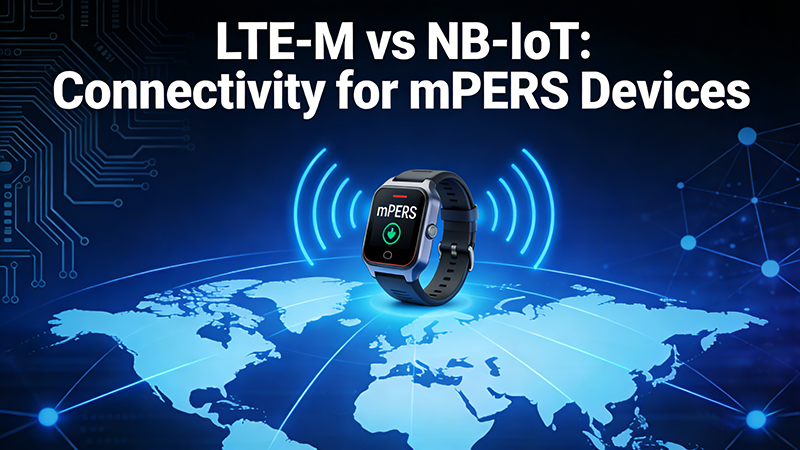
LTE-M vs NB-IoT

Modern mPERS (mobile Personal Emergency Response Systems) devices depend on one critical factor: reliable IoT connectivity. Whether enabling emergency alerts, GPS tracking, or two-way voice communication, the network technology behind these systems determines their real-world performance and safety.

This article provides a clear, expert-level breakdown of 4G, LTE-M, and NB-IoT, helping manufacturers and solution providers make informed connectivity choices for next-generation mPERS products.

The Evolution of IoT Connectivity

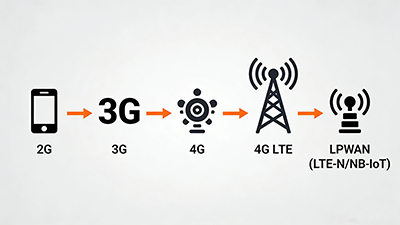
The IoT landscape has evolved from simple 2G modules to sophisticated low-power networks that support millions of devices simultaneously. Understanding this evolution helps explain why LTE-M and NB-IoT now dominate the mPERS and wearables space.

From 4G to LPWAN

4G LTE, designed primarily for mobile broadband, laid the groundwork for machine-type communications. However, IoT devices required something different: low bandwidth, wide coverage, and minimal power consumption.

This need gave rise to LPWAN (Low-Power Wide Area Networks) — a family of technologies built for long-range, low-data-rate applications.

Why LTE-M and NB-IoT Emerged

Both LTE-M and NB-IoT are standardized by 3GPP and operate within existing LTE infrastructure. Their goal: to make cellular networks more efficient for connected sensors, trackers, and emergency devices that prioritize reliability over raw speed.

IoT connectivity

Understanding the Core Technologies

Before comparing LTE-M vs NB-IoT, it’s crucial to understand what each one does best — and where 4G still plays a foundational role.

4G LTE: The Baseline Standard

4G LTE provides high throughput and low latency, supporting video, VoIP, and high-frequency data transmission. For IoT, it’s often too power-intensive, but it remains essential for devices needing real-time, high-bandwidth communication.

LTE-M: Mobility Meets Efficiency

LTE-M (Cat-M1) balances mobility, bandwidth, and battery life. It supports voice calls (VoLTE), handovers between cell towers, and over-the-air firmware updates — all critical for mobile emergency devices that travel with the user.

NB-IoT: Efficiency and Depth

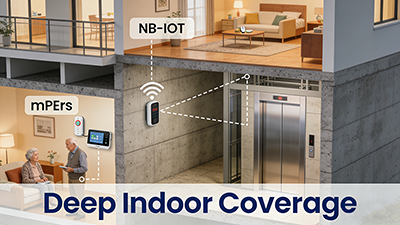
NB-IoT (Cat-NB1/NB2) focuses on extreme power efficiency and deep indoor penetration. Its narrow bandwidth allows signals to reach basements, hospitals, and rural areas where LTE-M might weaken, making it ideal for stationary or semi-fixed safety devices.

mPERS connectivity

Key Connectivity Criteria for mPERS Devices

Selecting the right network for mPERS starts with understanding the technical and operational requirements these devices face.

Latency and Real-Time Performance

When an emergency alert is triggered, every millisecond matters. LTE-M offers latency below 100 ms, enabling instant voice and data communication, while NB-IoT’s higher latency (1–10 seconds) makes it better suited for non-urgent data reporting.

Coverage and Reliability

mPERS users are often indoors or on the move. NB-IoT provides deeper penetration through concrete and underground structures, while LTE-M delivers reliable coverage across mobile zones and during handovers — critical for wearable emergency devices.

Battery Efficiency

Power-saving modes like PSM (Power Saving Mode) and eDRX (extended Discontinuous Reception) extend device lifespan. NB-IoT can last up to 10 years on a single battery in static use cases, whereas LTE-M typically sustains multi-year battery life with active communication.

LTE-M vs NB-IoT: Side-by-Side Comparison

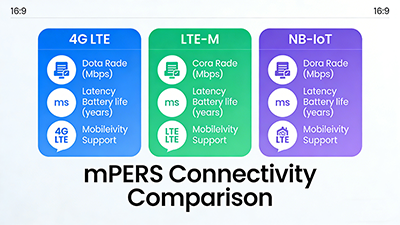
The following table summarizes key differences between LTE-M and NB-IoT, particularly from an mPERS perspective.

Feature LTE-M NB-IoT
Data Rate Up to 1 Mbps Up to 250 kbps
Mobility Full handover & roaming Limited or fixed
Latency <100 ms 1–10 s
Battery Life Excellent Superior
Coverage Depth Strong Deepest
Voice Support (VoLTE) Yes No
Best Fit Mobile mPERS & trackers Stationary emergency devices

Interpretation for mPERS

If your product needs real-time alerts, GPS tracking, or voice communication, LTE-M is the superior choice. For static emergency units requiring long battery life and robust indoor coverage, NB-IoT is more cost-effective.

Deployment and Global Availability

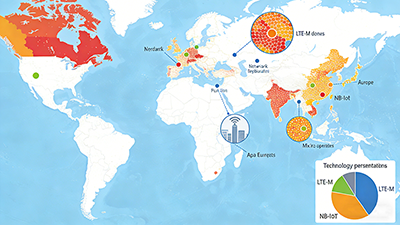
Not all regions support both LTE-M and NB-IoT equally — a crucial consideration for manufacturers planning international rollouts.

Regional Network Trends

  • North America: LTE-M widely deployed, NB-IoT emerging.

  • Europe: Strong NB-IoT coverage; LTE-M adoption accelerating.

  • Asia-Pacific: NB-IoT is dominant, especially in China and Korea.

Roaming and Compatibility

LTE-M offers broader international roaming, making it ideal for cross-border mPERS devices. NB-IoT roaming remains limited but is improving as carriers expand 3GPP-compliant coverage.

Future-Proofing for 5G

Both LTE-M and NB-IoT are integral to the 5G Massive IoT roadmap, ensuring long-term support through at least 2035. This guarantees continuity for device makers, avoiding premature obsolescence.

4G

Real-World Applications and Integration Strategies

Translating technology into product success requires understanding how each connectivity model performs in the field.

LTE-M for Wearable mPERS Devices

LTE-M supports two-way communication, GPS tracking, and fall detection in portable devices. Many leading brands use LTE-M-enabled SIMs to ensure users remain connected during travel or outdoor activity.

NB-IoT for Stationary or Semi-Mobile Units

Home-based safety devices, medical alert stations, or facility monitoring systems benefit from NB-IoT’s deep coverage and low maintenance. It minimizes battery replacement frequency and network interference.

Hybrid Approaches

Some advanced IoT modules combine LTE-M and NB-IoT in one chip, automatically selecting the best network available. This dual-mode design offers flexibility and reliability across different use environments.

IoT

Making the Right Choice for Your mPERS Solution

When evaluating LTE-M vs NB-IoT, balance technical specifications with real-world use. For most mobile emergency devices, LTE-M offers the best trade-off between responsiveness, reliability, and global coverage.

Decision Framework

Mobile users or fixed installations?

  • Mobile → LTE-M

  • Fixed → NB-IoT

Voice communication required?

  • LTE-M only

Deployment region & roaming?

  • LTE-M for global; NB-IoT for regional deployments

Battery priority?

  • NB-IoT wins for ultra-long life

Implementation Recommendations

  • Test both technologies under real network conditions.

  • Partner with a global IoT connectivity provider offering multi-carrier SIM management.

  • Optimize firmware and alert frequency to balance performance with battery longevity.

About Eview

Shenzhen Eview GPS Technology has been a leading provider of innovative telecare and personal safety solutions for 16 years. Our core product portfolio includes mobile personal emergency response systems (mPERS), SOS watches, and in-home hubs, designed to protect and empower vulnerable groups such as the elderly, lone workers, and kids.
eviewgps
With independent manufacturing lines and a dedicated R&D team, we offer comprehensive OEM and ODM customization services. From hardware design to software integration, Eview ensures flexible, reliable, and cost-effective solutions tailored to the unique needs of our global partners.

Conclusion: Reliable Connectivity, Safer Lives

The choice between LTE-M and NB-IoT ultimately defines how reliable, efficient, and future-ready your mPERS product will be.
For most mobile, safety-critical applications, LTE-M delivers the best blend of mobility, latency, and coverage. Meanwhile, NB-IoT remains a powerful ally for static installations that require long battery life and indoor penetration.

By aligning network capabilities with user needs, manufacturers can ensure mPERS devices stay connected when it matters most — turning connectivity into confidence, and technology into trust.

Frequently Asked Questions

1. What’s the difference between LTE-M and NB-IoT?

Both are 4G-based IoT connectivity technologies optimized for low-power, wide-area communication. LTE-M offers higher data rates, mobility, and voice support—making it ideal for mobile devices like mPERS wearables. NB-IoT, on the other hand, focuses on deep indoor coverage and ultra-low power usage, which is better suited for stationary devices.

2. Why is LTE-M preferred for mobile personal emergency response systems (mPERS)?

mPERS devices depend on real-time alerts, GPS tracking, and two-way voice communication. LTE-M provides the speed, mobility, and network handover capabilities necessary to maintain consistent connectivity during emergencies.

3. Can NB-IoT be used for mPERS?

Yes, but it’s most suitable for fixed or semi-fixed safety systems—like in-home alarm units—where data is transmitted infrequently. NB-IoT’s deep penetration and low energy use make it excellent for indoor installations.

4. How does battery life differ between LTE-M and NB-IoT devices?

Both technologies utilize power-saving features, such as PSM and eDRX. NB-IoT typically supports longer standby periods—up to 10 years—while LTE-M achieves multi-year battery performance even with frequent communication.

5. Do these networks work worldwide?

Coverage varies by region. LTE-M has broader global roaming availability, while NB-IoT remains more localized but continues expanding quickly. Many modern modules now support dual-mode (LTE-M + NB-IoT) operation for maximum compatibility.

6. Will LTE-M and NB-IoT remain relevant in the 5G era?

Absolutely. Both technologies are integral to the 5G Massive IoT roadmap and will be supported well into the next decade, ensuring stability and longevity for connected devices.

STAY UPDATED

Get the latest news about Eviews! Subscribe to our blog below.

Related Article

Contact us

For any requirement, our team will be happy to respond to you inless than 24 hours.

Your information will be kept strictly confidential.