If you oversee procurement or risk for a construction firm, a mine, an oil and gas operator, or a utility, you live with a hard truth: when something goes wrong, seconds matter. The question isn’t whether to monitor lone and at‑risk workers—it’s how to do it in a way that reliably shortens time to verification and dispatch. This guide explains why the SOS watch—specifically one‑press SOS combined with two‑way voice—is becoming a critical building block in employee safety programs across hazardous industries. We’ll tie features to outcomes, map them to recognized standards, compare device options, and outline a procurement‑ready pilot plan with KPIs and TCO guidance.
Why an SOS watch for hazardous industries shortens response time
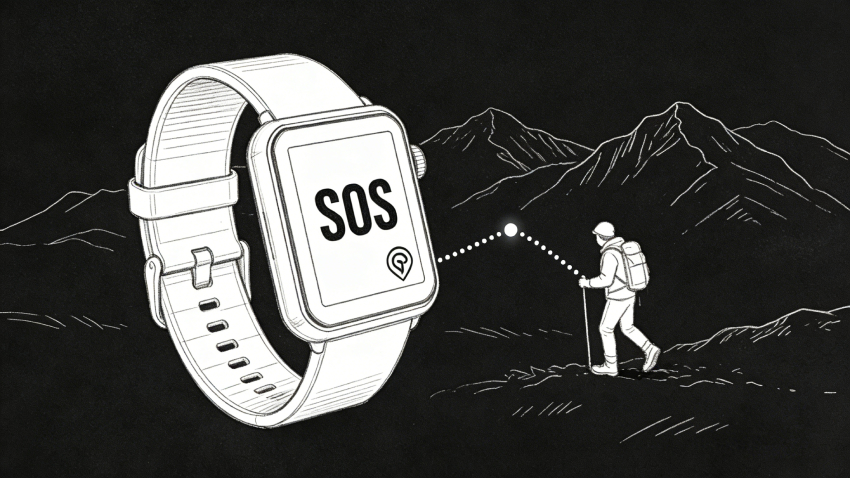
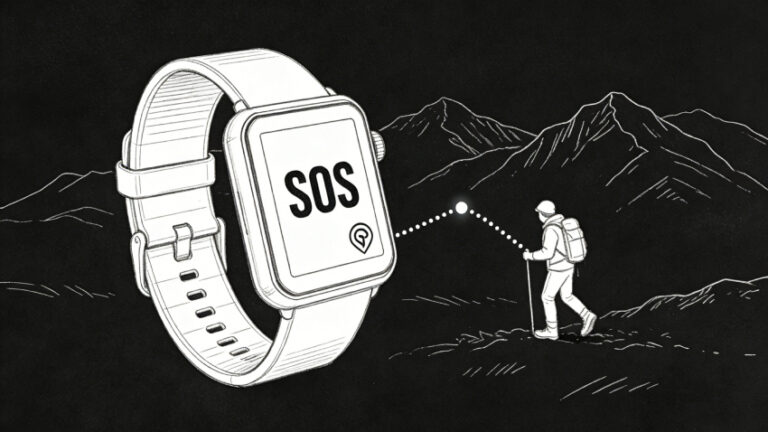
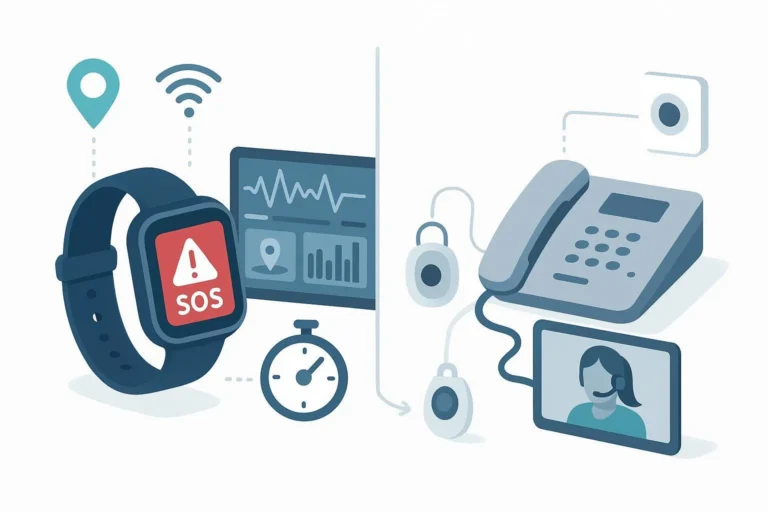
The fastest way to cut response time is to eliminate uncertainty. A one‑press SOS instantly opens a verified voice channel with an alarm receiving center (ARC) or an internal monitoring team, while simultaneously sharing location. That single design choice collapses minutes of back‑and‑forth into seconds of triage: “What happened? Are you mobile? What hazards are present?” In practice, two‑way voice reduces guesswork, speeds classification, and helps get the right resources moving.
Market signals show organizations are acting on this. In a global survey, wearables led all health and safety technologies at 15% adoption, reflecting growing confidence in worker‑worn systems for monitoring and proximity safety, according to the ERM 2024 Global Health & Safety Survey. See the adoption data in the ERM report under figure 8.1 in the section on health and safety technology trends: the ERM 2024 Global Health & Safety Survey.
What about real response times? Provider evidence suggests the model works. One UK lone‑worker service describes average ARC answer times around three seconds and shows how voice‑verified alarms streamline medical escalations—useful, but provider‑reported rather than independently audited. For examples of service workflows and time‑to‑answer claims, see the provider’s case narratives described by Peoplesafe in its medical emergency escalation example. Treat such figures as indicative and verify during your pilot.
How SOS Watches Work
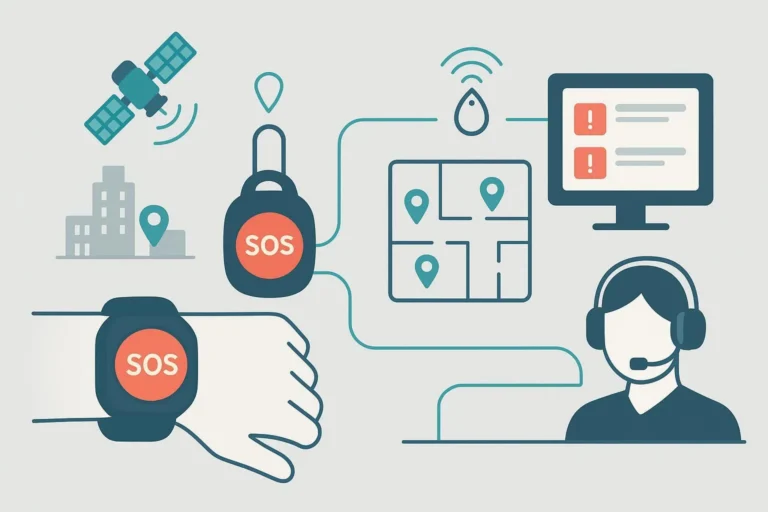
When a worker presses SOS, the device raises an alarm and opens an audio session to an ARC or internal operator. The operator verifies the situation through scripted questions, confirms identity and location, and follows an escalation tree to supervisors or emergency services. Two‑way voice is the difference between “possible incident” and “confirmed emergency.”
GPS alone struggles indoors and in dense metal environments, so modern wearables blend GPS/GNSS with Wi‑Fi and Bluetooth signals and, when available, cellular triangulation to produce a more reliable fix. The goal is not perfection everywhere but predictable accuracy bands—e.g., sub‑10 m outdoors in clear sky, 10–30 m near structures, and room‑level indoors with beaconing. The footprint you choose (Wi‑Fi fingerprints, BLE beacons) should match rescue access points and known hazards.
Accelerometers and gyros detect sudden impacts, angle changes, and periods of immobility. Well‑tuned systems introduce “debounce” and user‑acknowledge timers to suppress nuisance alarms from normal activity. Accuracy depends on role‑specific thresholds—what’s normal for a lineman on a pole won’t match a technician in a control room—and on good training so workers understand when and how to cancel an accidental alarm. At the platform level, organizations increasingly expect app‑level configurability of thresholds and check‑in timers. For a concise view of these capabilities in a product context, see an overview of an SOS watch portfolio on the SOS smart wearables page and a platform view of configurable fall detection.
At scale, device management matters. Remote configuration, firmware over‑the‑air (FOTA), SIM management, battery health, and audit logs are essential so safety teams can maintain a fleet without pulling devices off the field. APIs or standard protocols also matter if you plan to feed alarms and locations into existing monitoring platforms.
Compliance Primer for High‑Hazard Sites
Regulators don’t certify your exact hardware choices, but they do frame your program expectations—training, monitoring, communications, and emergency arrangements. Here’s how the main regimes align with SOS watch programs.
United States OSHA and NIOSH. There’s no single “lone worker” OSHA standard. Employers rely on the General Duty Clause and task‑specific rules (e.g., permit‑required confined spaces, respiratory protection, HAZWOPER, electric power generation). In 2024 OSHA and NIOSH launched a partnership addressing lone‑worker risks, emphasizing monitoring and communications to mitigate delayed response; see the OSHA–NIOSH partnership note on lone workers and OSHA’s mention in OSHA QuickTakes.
UK HSE and BS 8484. HSE expects employers to manage lone‑working risks, ensure supervision/monitoring, and establish clear emergency procedures and regular contact. See HSE’s employer guidance on lone working duties. In the UK market, many providers align with the code of practice for lone‑worker services outlined in BS 8484:2022, which sets out service, ARC, and procedural requirements.
ATEX/IECEx for explosive atmospheres. If your workers enter classified areas, your equipment selection must be Ex‑certified for the relevant zone and atmosphere. HSE provides a clear overview of ATEX and explosive atmospheres, and the IECEx scheme hosts a public database for certificate verification at the IECEx equipment search.
For shortlisting, compress your checks into three questions: do the certificates match your zones and substances, is two‑way voice intelligible in your noisiest spaces with PPE, and what indoor positioning footprint is required to achieve your rescue accuracy target?
What to Buy: SOS Watch vs Rugged Handset vs App plus Tag
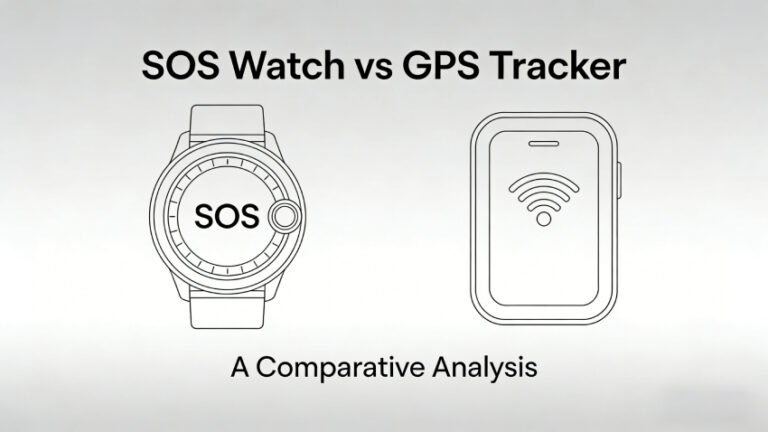
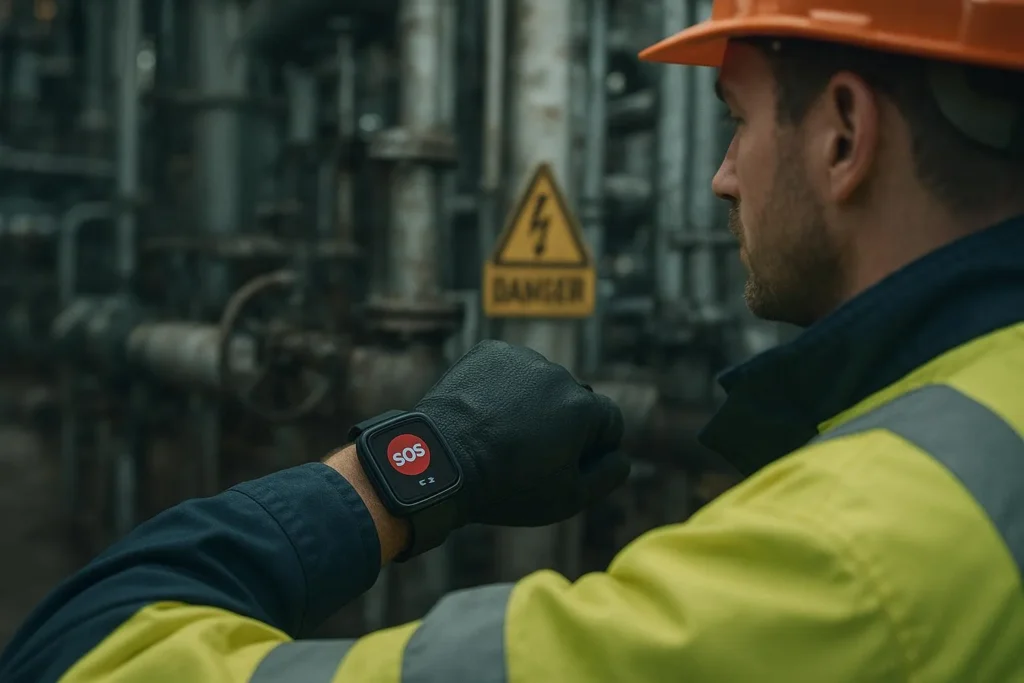
Form factor should follow job risk, radio environment, and PPE. An SOS watch keeps the alert on‑wrist and hands‑free, which can be faster under gloves or when a worker can’t reach a pocket. Rugged handsets add apps and camera tools but may be left in a pouch. Phone apps with a clip‑on tag can be cost‑effective for mixed‑risk populations but depend heavily on phone carry behavior.
| Option | Strengths | Constraints | Where it fits |
|---|---|---|---|
| SOS watch | Instant on‑wrist SOS and voice; good adoption for hands‑busy tasks; lightweight | Limited screen/app scope; check Ex options for zones | Refineries, utilities substations, high‑noise areas, roles with gloves or tools |
| Rugged handset | Rich apps and camera; PTT; higher compute | May be pocketed; heavier; requires more training | Supervisors, field engineers, mixed comms and data tasks |
| App + tag | Lower CAPEX; flexible; easy pilots | Dependent on phone carry; varying battery/runtime | Contractors, mixed‑risk roles, early program pilots |
Technical Realities That Make or Break Results
Two‑way voice in PPE environments. Microphone placement and noise suppression determine intelligibility when a pump room or compressor house hits 90 dBA. Prioritize hands‑free audio and confirm the device supports high‑quality voice over LTE. During pilots, record time to verification and the number of repeat questions due to noise.
Indoor positioning without overbuilding. GPS fades under metal and reinforced concrete. A modest BLE beacon plan (doorways, stairwells, control rooms) can give rescue teams room‑level confidence. Don’t chase centimeter precision if your rescue decision would be the same; aim for consistency and document the 50th and 95th percentile errors by zone.
Fall and man‑down tuning. False alarms erode trust. Tune thresholds by role and add a short user‑acknowledge timer to let workers cancel accidental triggers. Use a scripted test protocol—climbing, kneeling, harnessing, dropping tools—to quantify false positives and false negatives before go‑live.
Intrinsic safety constraints for explosive atmospheres. Ex‑certified devices must limit ignition sources. That influences battery capacity, charging rules, and accessories. Plan charging in safe areas unless the charging system itself is certified for use in the zone.
Monitoring and ARC Escalation from Button Press to Dispatch
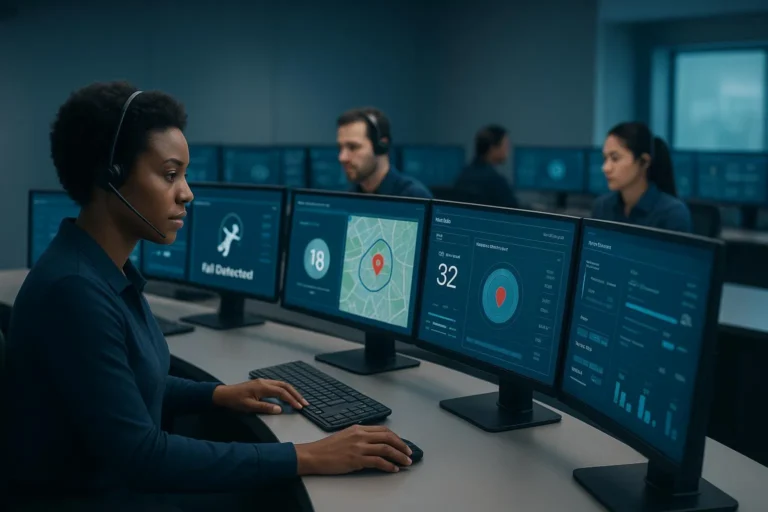
A reliable end‑to‑end workflow links the worker, the device, the operator, and your emergency response plan. A smooth flow looks like this: an SOS or automated man‑down event includes device ID, user, location, and battery status; the ARC answers within a defined SLA, establishes two‑way voice, and runs a dynamic risk‑assessment script focused on hazards, mobility, and next actions; the operator escalates to site supervisors or emergency services per your playbook; and the event closes with audio, location traces, and timestamps for post‑incident review.
Practical product workflow example (with disclosure). Disclosure: Eview is our product. In refinery deployments, a watch‑class device can send an SOS, open two‑way voice to a monitoring center, and share hybrid GPS/Wi‑Fi/BLE location. A supervisor sees the alert on the platform, confirms the zone, and dispatches the plant ERT while the operator keeps the worker talking. For an overview of the watch form factor, see the SOS smart wearables page, and for configurable man‑down thresholds and training materials, review platform‑level fall detection options. This example illustrates a typical workflow; verify performance in your own pilot. If your program includes environmental sensing, you can complement wearables with fixed systems; a high‑level overview is available under monitoring systems.
Procurement Toolkit for Hazardous Sites
Ask sharp RFP questions that surface reality: Which Ex zones and gases/dusts are supported, and can the vendor provide certificate numbers and quality audit references you can verify in the IECEx database? Which LTE bands, voice codecs, and noise‑suppression features are available, and can the vendor demonstrate intelligible two‑way audio in your noisiest locations? What indoor positioning accuracy targets can be met by building type, and what beaconing or Wi‑Fi plan is required to achieve them?
Define pilot KPIs that prove value. Focus on response metrics (time from SOS to answer; answer to verification; verification to dispatch; on‑scene arrival where measurable), location metrics (time‑to‑first‑fix; median and 95th percentile accuracy by zone; indoor coverage gaps), and adoption/reliability (activation success rate; training time; device uptime and battery runtime by role). Capture these over several weeks to smooth out anomalies.
Model total cost of ownership before scale. Combine hardware CAPEX, SIM/data, ARC monitoring fees, integration engineering, training time, replacements and MTTR, and any beaconing infrastructure. Include the effort to verify Ex certifications and to maintain documentation.
Case Evidence and How to Validate Claims
Provider‑reported metrics can orient expectations, but they shouldn’t replace measurement. For instance, a provider citing a three‑second average ARC answer time signals a likely order of magnitude for operator pickup, yet does not guarantee it on your sites. See a service narrative describing operator pickup and escalation in the Peoplesafe medical emergency example. In parallel, macro‑level adoption data from ERM provides context that organizations are investing in wearables; consult the ERM 2024 survey for the broader trend line.
During your pilot, capture baselines for emergency calls without devices (if available) or run A/B shifts where policy allows. The aim is to measure deltas: seconds shaved from verification, fewer misroutes, reduced false alarms after tuning. Document assumptions alongside numbers so leadership can trust the results.
Implementation Playbook for Hazardous Sectors
Refineries and gas processing. Use only Ex‑certified wearables matched to your classified zones, verify certificates and markings, place BLE beacons at entries, stairwells, control rooms, and muster points, and enforce charging in safe areas unless the charging kit is certified.
Mining operations. Where cellular coverage is sparse, consider devices or accessories with satellite support for critical paths. Underground, use check‑in timers and relay beacons in declines, and predefine the escalation chain when voice is degraded.
Electric utilities and substations. Many utilities already run GPS‑enabled fleet and worker movement policies, indicating organizational readiness for location‑aware safety. Align the SOS watch rollout with switching procedures and energized‑work rules to avoid alarm fatigue during standard operations.
FAQs
What makes an SOS watch different from a phone app in a hazardous setting? The on‑wrist form factor means truly one‑hand or hands‑free activation under gloves or harnesses, plus faster access to two‑way voice. In many tasks, workers leave phones pocketed or in lockable pouches.
Do I need ATEX or IECEx certification for every watch in the program? Only for devices used in classified explosive atmospheres. If any role enters Zone 0/1/2 or 20/21/22, those users must carry Ex‑certified equipment matched to the hazard classification. Verify certificates via the public database at the IECEx equipment search and request the manufacturer’s Declaration of Conformity.
How accurate is indoor location with a watch? It depends on your infrastructure. GPS alone won’t deliver room‑level accuracy. With a modest BLE beacon plan or Wi‑Fi fingerprinting, you can usually achieve consistent room‑ or area‑level precision sufficient for most rescue decisions.
Will fall or man‑down alarms create too many false positives? They can if untuned. Role‑specific thresholds and acknowledge timers reduce nuisance alarms. Validate with a scripted test protocol during the pilot and track the false‑positive rate week by week.
How many devices should we include in a pilot? Enough to cover each risk profile and location type you intend to support—often 20–50 units spread across roles and shifts. The goal is to measure response, location, and adoption KPIs under real workloads.
Evidence and standards referenced in this guide include HSE’s employer guidance on lone working duties, the OSHA–NIOSH partnership note on lone workers with the OSHA mention in OSHA QuickTakes, the BS 8484:2022 code of practice overview, HSE’s overview of ATEX and explosive atmospheres, the IECEx equipment search for certificate verification, and adoption data from the ERM 2024 Global Health & Safety Survey. These anchors provide authoritative context; performance claims should be validated in your own pilot on the ground.