
In Remote Patient Monitoring (RPM), the ‘Data Integration Barrier’ limits effective patient care. Relying solely on complex medical-grade devices often leads to issues like data overload and fragmentation. These barriers can hinder long-term patient compliance. Non-clinical wearables enhance the quality of care for various health needs, serving as a bridge between you and healthcare providers. They improve engagement and make advanced technologies more accessible. Eview’s innovative solutions can help you achieve seamless data flow, ensuring consistent monitoring and better health outcomes.
Key Takeaways
- Seamless data flow from non-clinical wearables enhances Remote Patient Monitoring (RPM) by providing continuous visibility into patient health.
- Integrating open protocols and APIs allows for efficient data exchange, breaking down silos and improving patient care.
- Eview’s smart wearables offer advanced features like real-time monitoring and AI capabilities, enabling early detection of health issues.
- Ensuring data security and compliance with regulations like HIPAA is crucial for protecting patient information and building trust.
- Utilizing non-clinical wearables can lead to improved clinical outcomes, reduced hospital readmissions, and better patient engagement.
RPM Data Gaps: Traditional Wearables
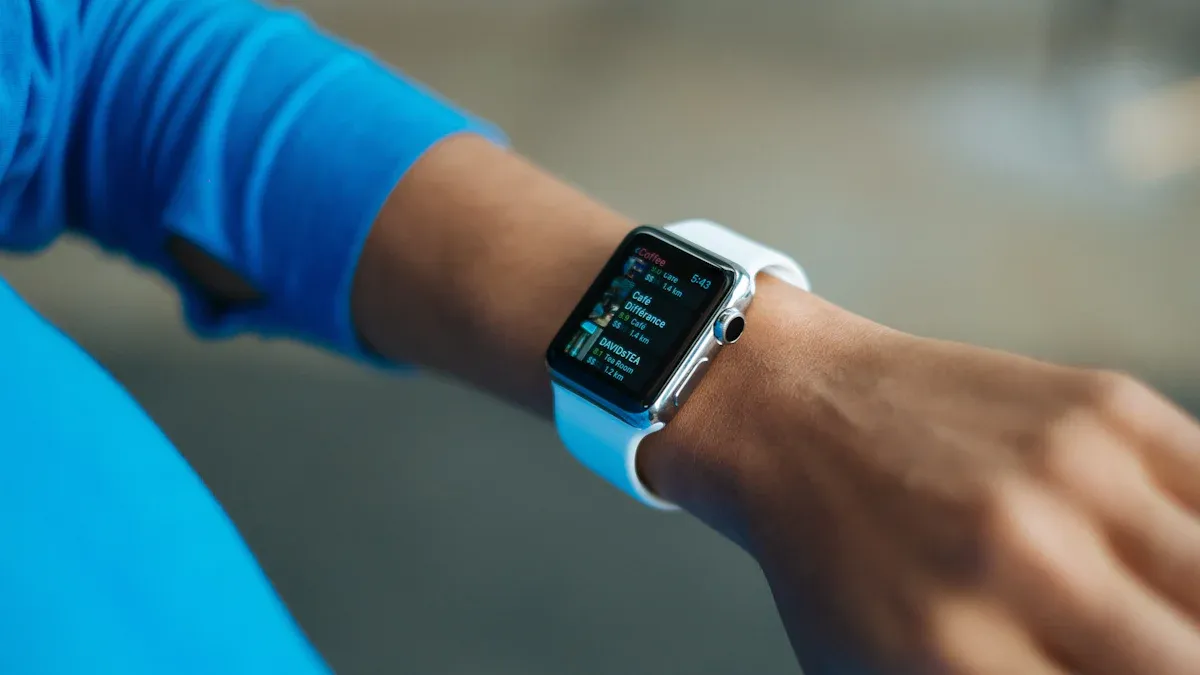
Data Fragmentation Challenges
Traditional wearables often create significant data fragmentation challenges in RPM. This fragmentation occurs when different devices collect data in various formats. Here are some key points to consider:
- Data fragmentation is a primary obstacle in integrating wearable technology into healthcare.
- Multiple factors create barriers between wearable devices and their effective use in patient care.
- It hampers healthcare professionals’ ability to make informed decisions.
- Fragmented data complicates the creation of a comprehensive view of a patient’s health.
- This results in inaccurate diagnoses and treatment delays, which can endanger patient safety.
Different wearable devices often use proprietary formats and metrics. This diversity makes it challenging to aggregate and compare data across different platforms. As a result, you may find it difficult to get a clear picture of your health status.
Reliability and Connectivity Issues
Reliability issues in traditional wearables can significantly affect clinical decision-making in RPM programs. When wearables fail to provide consistent data, it leads to misinterpretations that can impact your care. Consider the following:
- Reliability issues in wearables can lead to misinterpretations of data, affecting clinical decisions in RPM programs.
- Variability in data collection methods and devices complicates the assessment of data quality, which is crucial for accurate clinical decisions.
- Poor data quality can result in unnecessary stress for patients and misallocation of healthcare resources, impacting overall treatment effectiveness.
In comparison to medical-grade devices, traditional wearables may not always meet stringent accuracy requirements necessary for clinical applications. For instance, while consumer-grade wearables can provide clinical-grade accuracy for specific measures, such as overnight SpO₂, they often fall short in other areas.
| Aspect | Traditional Wearables | Medical-Grade Devices |
|---|---|---|
| Data Accuracy | May not meet clinical accuracy standards | Designed to provide clinically validated data |
| Continuity | Varies, may lack robust integration | Integrated into clinical workflows with high reliability |
Eview’s Smart Wearables: Enhancing RPM
Continuous Connectivity Features
Eview’s smart wearables ensure uninterrupted data transmission, which is crucial for effective remote patient monitoring. These devices utilize advanced technologies to maintain a constant flow of health data. Here are some key features that enhance connectivity:
- LiteNet: This technology guarantees efficient processing for low-power devices, ensuring they remain operational without frequent recharging.
- 5G: High-speed, real-time communication becomes possible with 5G, allowing healthcare providers to receive data instantly.
- Deep Reinforcement Learning: This feature enhances adaptive decision-making, enabling timely actions based on real-time data.
- MIoT: The integration of a strong network of interconnected medical products supports seamless communication between devices.
- Choquet Integral Fuzzy VIKOR: This technology improves decision-making by integrating complex patient data, allowing for more informed clinical decisions.
These features work together to provide low latency and high bandwidth, which are essential for timely medical treatment. Additionally, two-factor authentication and Physical Layer Security ensure the protection of sensitive health data.
Advanced Health Monitoring Capabilities
Eview’s smart wearables excel in early detection of health anomalies, setting them apart from standard wearables. Continuous monitoring allows healthcare providers to identify potential issues before they escalate. Here’s how these capabilities enhance RPM:
- Wearable devices equipped with AI can predict health issues before they become clinically apparent. This proactive approach allows for early intervention, which is vital for effective patient care.
- Continuous monitoring enables healthcare providers to detect anomalies early, ensuring timely responses to any changes in a patient’s condition.
Moreover, the integration of Eview’s wearables into RPM significantly boosts patient engagement and adherence. Real-time data collection enhances the accuracy of patient monitoring. This data informs decision-making, allowing for personalized care plans that cater to individual patient needs. As a result, you can expect improved patient outcomes and increased adherence to treatment protocols.
Eview’s smart wearables not only provide essential health data but also empower you to take charge of your health. By facilitating seamless communication between patients and healthcare providers, these devices enhance the overall effectiveness of remote patient monitoring.
Integration Solutions for RPM Platforms
Open Protocols and APIs
Seamless integration is vital for effective remote patient monitoring (RPM). Open protocols and APIs play a crucial role in facilitating this integration. They allow various systems, devices, and applications to exchange information securely and efficiently. Here are some key benefits of using open protocols and APIs in RPM:
- APIs connect electronic health records (EHRs), patient apps, lab systems, pharmacies, and wearable devices.
- They enable the flow of healthcare data where and when it is needed, breaking down traditional data silos.
- Open-source platforms provide unified access to over 200 wearable devices, avoiding vendor lock-in and fragmented APIs.
These features support interoperability in life sciences and MedTech, allowing developers to build AI-powered health applications with standardized APIs. This approach enhances patient engagement by ensuring that healthcare providers have access to real-time data.
Ensuring Data Security and Compliance
Data security and compliance are paramount when handling sensitive health information from non-clinical wearables. RPM platforms must adhere to regulations like HIPAA to protect patient data. Here are some key requirements for ensuring compliance:
| Key Requirement | Description |
|---|---|
| Data Encryption | All electronic Protected Health Information (ePHI) must be encrypted during transmission and storage to prevent unauthorized access. |
| Access Controls | Implementing strict access controls ensures that only authorized personnel can access patient data. |
| Audit Trails | Maintaining logs of data access and modifications helps in monitoring and responding to potential breaches. |
| Business Associate Agreements (BAAs) | Healthcare providers must have BAAs with third-party vendors handling ePHI, ensuring they also comply with HIPAA standards. |
By implementing these measures, RPM platforms can ensure that they maintain the highest standards of data security and compliance. This not only protects patient information but also fosters trust between patients and healthcare providers.
Seamless data flow from non-clinical wearables plays a crucial role in enhancing Remote Patient Monitoring (RPM). By integrating these devices, you gain continuous visibility into patient health status. This leads to improved clinical outcomes, reduced hospital readmissions, and better patient engagement.
Here are some measurable benefits of this integration:
| Benefit | Description |
|---|---|
| Improved Clinical Outcomes | Enhanced patient health through continuous monitoring and timely interventions. |
| Reduced Hospital Readmissions | Decreased likelihood of patients returning to the hospital due to proactive care management. |
| Enhanced Workflow Efficiency | Streamlined processes reduce administrative burdens and improve provider productivity. |
| Better Patient Engagement | Increased patient involvement in their own care through real-time feedback and data sharing. |
Eview stands out as a leader in this field. Our innovative solutions facilitate seamless communication between healthcare technology systems. By integrating electronic health records (EHRs) and medical devices, we provide a comprehensive view of patient data. This approach aligns with the trend towards personalized care, reinforcing our position in the RPM market.
FAQ
What types of data can Eview’s smart wearables collect?
Eview’s smart wearables collect various health data, including heart rate, SpO₂ levels, and activity metrics. They continuously monitor these parameters to provide real-time insights into your health status.
How does Eview ensure data security?
Eview employs robust security measures, including data encryption and strict access controls. These practices protect your sensitive health information and ensure compliance with regulations like HIPAA.
Can I integrate Eview’s devices with my existing healthcare systems?
Yes, Eview’s devices support open protocols and APIs, allowing seamless integration with your existing healthcare systems. This feature enhances data flow and improves patient monitoring.
How do Eview’s wearables improve patient engagement?
Eview’s wearables enhance patient engagement by providing real-time feedback and alerts. This immediate access to health data encourages you to take an active role in managing your health.
What support does Eview offer for its RPM solutions?
Eview provides comprehensive support, including technical assistance, firmware updates, and troubleshooting guidance. Their dedicated team ensures you can effectively use the RPM solutions.