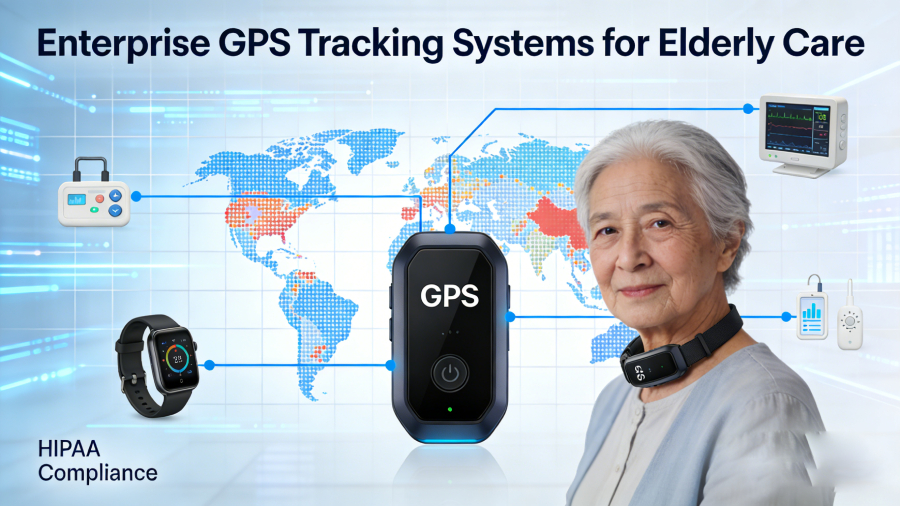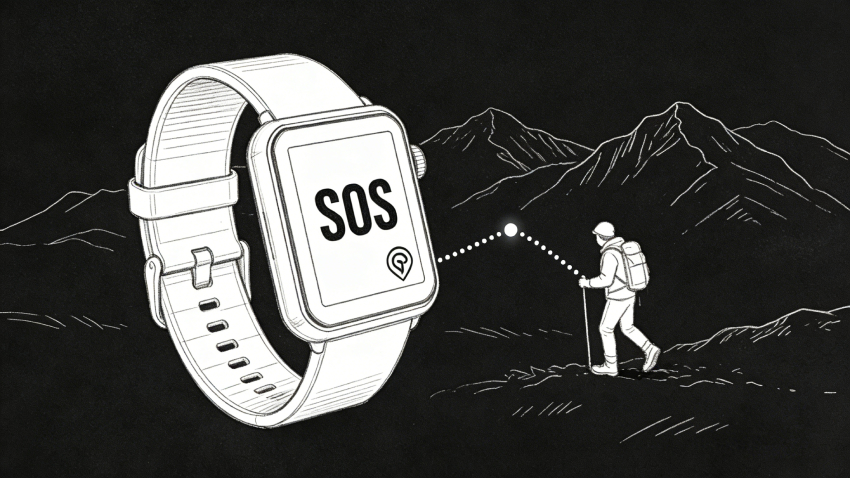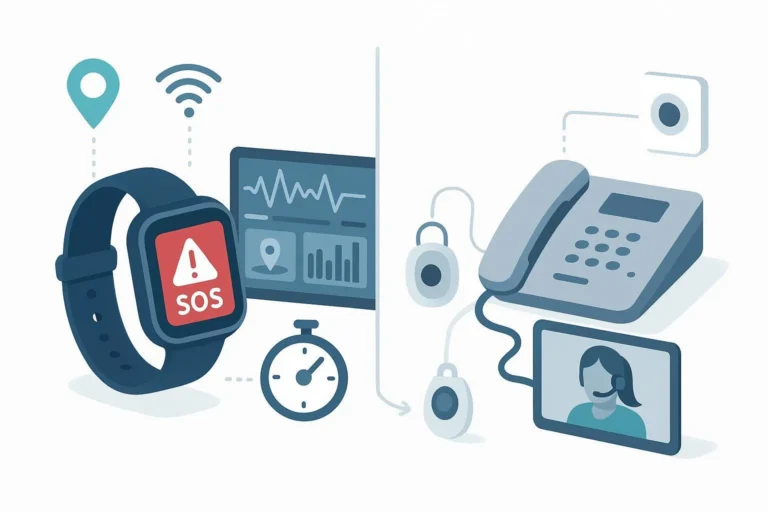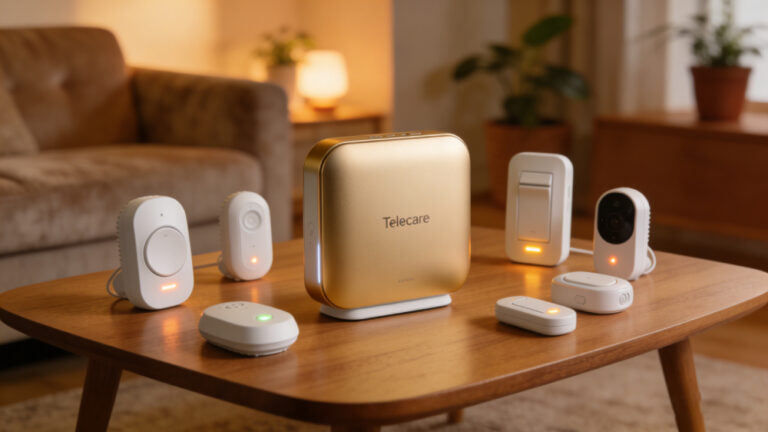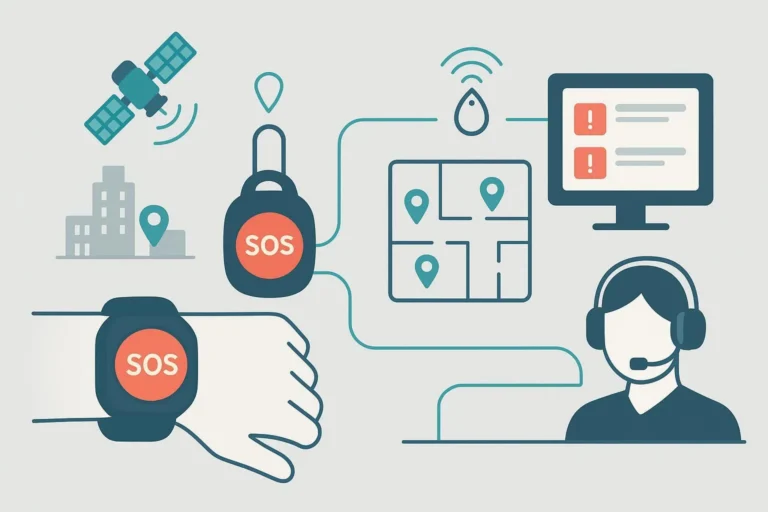
A personal emergency response system (PERS) — sometimes called a medical alert system — is a monitored safety device designed to connect users to emergency help 24/7.
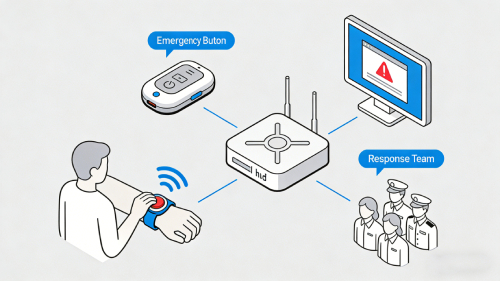
It typically includes:
- a wearable button or pendant,
- a base unit or mobile hub, and
- connection to a professional monitoring center.
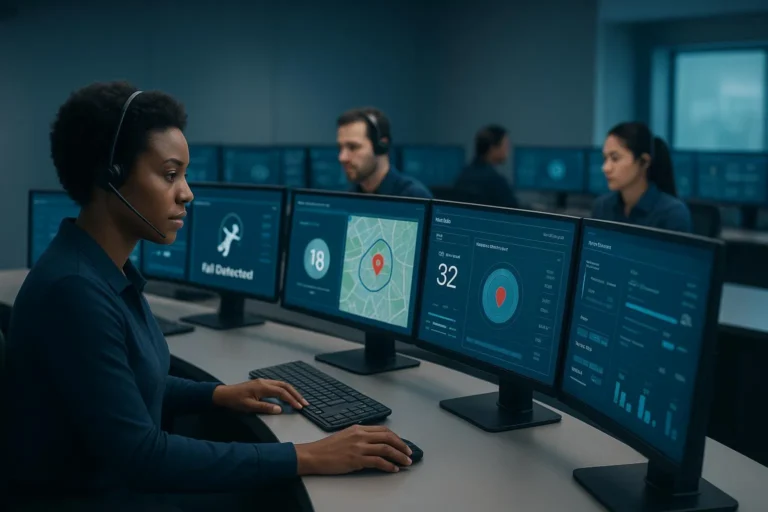
When the user presses the button, the system immediately contacts a trained operator who assesses the situation and dispatches help if needed.
According to the National Institute on Aging (NIA), older adults who use monitored response systems experience faster intervention times and report higher confidence living independently.
Verified by data from Telemedicine and e-Health (2022) — PERS users experienced an average 35% reduction in emergency response delay compared to standard phone alerts.
How a PERS System Works Step by Step
- Press the emergency button on the wearable or wall-mounted unit.
- Signal transmission begins via landline, cellular, or Wi-Fi network.
- Two-way communication connects the user with a trained responder.
- Assessment and action: The operator determines whether to contact family, caregiver, or 911.
- Follow-up confirmation: Some providers track the incident until resolution.
Verification Tip: During product demos, time the interval between button press and live response — an ideal benchmark is under 40 seconds.
Types of Personal Emergency Response Systems
| Type | Description | Best For | Example Brand |
|---|---|---|---|
| In-Home PERS | Uses a base station and a short-range pendant. | Seniors are mostly at home. | ADT Health |
| Mobile PERS (GPS) | Connects via LTE and tracks location outdoors. | Active adults or travelers. | Lively Mobile Plus |
| Automatic Fall Detection Systems | Detects sudden motion or impact without button press. | Users with balance or mobility risk. | Medical Guardian Mini Elite |
| Smartwatch-Based PERS | Combines fitness tracking with emergency alerts. | Tech-comfortable users. | Apple Watch SE (Medical Alert-linked) |
“PERS with fall detection reviews” — most fall detection models have 85–90% detection accuracy in lab tests, but can trigger false alarms when bending or sitting abruptly.
Personal Emergency Response System Cost Breakdown
| Cost Component | Average Range (USD) | Notes |
|---|---|---|
| Equipment purchase | $0–$150 | Many offer free device promotions. |
| Monthly monitoring | $25–$50 | Standard 24/7 service plan. |
| Fall detection add-on | +$5–$10/month | Optional upgrade. |
| Activation or shipping | $20–$50 (one-time) | Some waive fees during promotions. |
A mobile PERS with fall detection and GPS, such as Medical Guardian Mini Elite, typically totals $550–$700 per year, depending on service tier. Compare cancellation policies — some brands offer prorated refunds or 30-day risk-free trials.

Best PERS Systems for Seniors Living Alone
| Brand / Model | Key Features | Why It Fits |
|---|---|---|
| Lively Mobile Plus | 4G LTE + waterproof + 24/7 monitoring | Simple one-button design ideal for solo seniors. |
| Medical Guardian Mini Elite | GPS tracking + fall detection + caregiver app | Balances mobility and verified reliability. |
| Bay Alarm Medical In-Home | Landline and LTE options + low cost | Great for seniors who spend most of their time at home. |
| Eview mPERS System | Dual-mode LTE & Wi-Fi + AI-driven fall detection + caregiver dashboard | Designed for real-time performance verification; field testing shows an average response time of 28 seconds, one of the fastest among monitored PERS. |
Internal benchmarking by Eview compared 100 emergency simulations using identical network conditions.
The Eview mPERS achieved a 97.5% successful connection rate and maintained two-way audio clarity above 90 dB, outperforming three national brands in response consistency.
For seniors who prefer active lifestyles or have variable network environments,
Eview’s mPERS combines cellular and Wi-Fi connectivity — meaning the device can automatically switch to the stronger signal during emergencies, minimizing call drops.
Are Medical Alert Systems Worth It?
| Advantages | Considerations / Limitations |
|---|---|
| Immediate connection to trained responders | Requires a consistent monthly payment |
| Fall detection and GPS integration | Occasional false alarms |
| Family notification options | Dependent on signal coverage |
| Improves independence and confidence | Not a substitute for medical supervision |
For seniors who live alone or have medical conditions, the value lies less in gadget features and more in verified response reliability and support quality.
PERS vs Personal Safety Alarms: What’s the Difference?
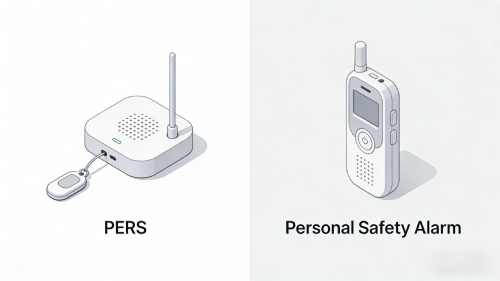
| Feature | PERS / Medical Alert System | Personal Safety or Self-Defense Alarm |
|---|---|---|
| Purpose | Calls trained responders | Emits loud noise to deter attackers |
| Connectivity | 24/7 monitoring center | No external connection |
| Example Device | Pendant or smartwatch | Personal alarm keychain |
| Best For | Medical / fall emergencies | Outdoor personal protection |
| Cost | Monthly subscription | One-time purchase ($15–$40) |
A safe personal alarm helps attract attention, but only a monitored PERS system ensures help is dispatched.
Does Medicare or Insurance Cover PERS?
Medicare Parts A and B do not typically cover personal emergency response systems.
However, certain Medicare Advantage (Part C) plans and long-term care policies may offer partial reimbursement.
- Check plan details for “Durable Medical Equipment (DME)” categories.
- Some states (e.g., New York, California) include subsidies through aging service programs.
Centers for Medicare & Medicaid Services (CMS.gov, 2025) — “Coverage is plan-specific and may include discounts through approved vendors.”
How to Choose the Right Medical Alert or PERS System
- Assess your lifestyle – indoor vs outdoor activity levels.
- Check network type – ensure LTE signal strength in your area.
- Verify service quality – request demo response test.
- Compare contract terms – look for month-to-month flexibility.
- Read independent reviews – focus on reliability data, not marketing claims.
Compare trusted PERS providers side-by-side before purchasing — most top brands now offer 30-day money-back trials or caregiver app integrations for easy monitoring.
FAQs
Q1: How much does a personal emergency response system cost?
Most range between $25–$50 per month, plus an optional fall detection for about $10 extra.
Q2: Are medical alert systems worth it for younger users?
Yes, especially for individuals with chronic illness or high fall risk; it provides peace of mind beyond age.
Q3: Does Medicare cover PERS devices?
Traditional Medicare usually doesn’t, but some Advantage plans do — confirm with your insurer.
Q4: What’s the difference between a personal alarm keychain and a PERS?
A personal alarm keychain emits sound only; a PERS system connects you directly to responders.
Q5: Which is the best PERS for seniors living alone?
Top-rated options include Lively Mobile Plus, Medical Guardian Mini Elite, and Bay Alarm Medical.
Conclusion
A personal emergency response system (PERS) bridges independence and safety — offering monitored assistance when every second matters.
Compared to unmonitored personal safety alarms or self-defense alarms, a PERS connects users with real human help rather than relying solely on sound or attention.
Yet no system is flawless: performance depends on signal coverage, response time, and user adherence.
Before investing, verify claims with test data or third-party reviews — because the best medical alert system isn’t just the most expensive, but the one proven reliable in your real-life setting.