Market Context — The Rise of Enterprise GPS Tracking for Elderly Care
The global elderly population surpassed 780 million in 2024, according to the World Health Organization (WHO), creating a surge in demand for real-time location intelligence within healthcare and senior-care systems. Best GPS Tracker for Elderly (2026): Enterprise & HIPAA-Compliant Solutions
B2B players — including nursing facilities, telehealth platforms, and healthcare IoT vendors — now treat elderly GPS tracking systems as mission-critical infrastructure.
Unlike consumer-grade devices, enterprise solutions must ensure:
- 99.5% device uptime
- End-to-end encryption
- API interoperability with Electronic Health Record (EHR) systems
- HIPAA-compliant data routing
These standards define the best GPS tracker for the elderly in professional deployments.
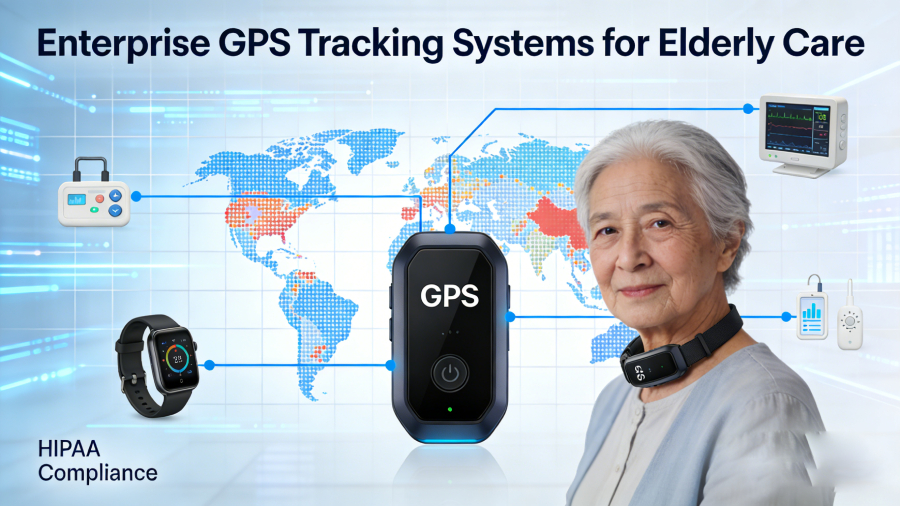
Technology Stack Overview: From GNSS to IoT Integration
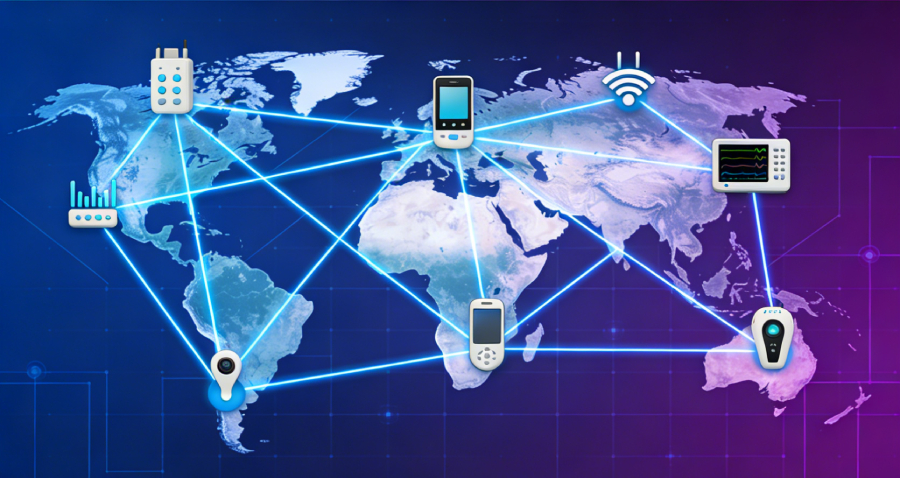
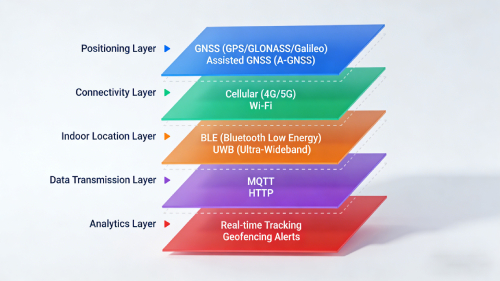
Modern elderly GPS trackers combine GNSS precision, multi-network communication, and cloud-based analytics into a unified IoT ecosystem.
Key Layers
| Layer | Technology | Function |
|---|---|---|
| Positioning | GPS, GLONASS, Galileo, QZSS | Sub-5 m outdoor accuracy |
| Connectivity | LTE-M / NB-IoT / 5G SA | Real-time low-latency updates |
| Indoor Location | BLE + Wi-Fi Fingerprinting | Continuous tracking in care facilities |
| Data Transport | MQTT / HTTPS | Secure bidirectional data flow |
| Analytics | AI anomaly detection | Predict wandering or inactivity |
According to the GSMA IoT Report 2025, LTE-M adoption in healthcare devices grew 46% YoY, driven by medical-grade GPS wearables.
Accuracy & Connectivity Benchmarks
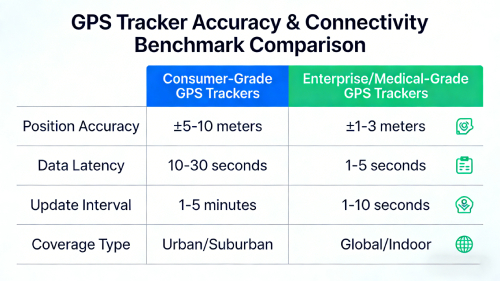
| Metric | Consumer-Grade Tracker | Enterprise / Medical-Grade Tracker |
|---|---|---|
| Position Accuracy | 10–15 m | 3–5 m |
| Data Latency | 4–6 s | ≤2 s |
| Update Interval | 30–60 s | 5–10 s |
| Coverage Type | Single LTE | LTE-M + NB-IoT Hybrid |
The best GPS tracker for elderly care must support multi-constellation GNSS with fallback protocols, ensuring uninterrupted location even in basements or dense buildings.
Power Management & Device Longevity
Enterprises evaluate trackers not only by precision but by power efficiency per duty cycle.
Optimization Features
- Adaptive ping algorithms adjusting to mobility patterns
- Low-power chipsets (Nordic nRF9160, Qualcomm 9205)
- Energy harvesting modules for continuous deployment
- Centralized battery analytics dashboards
Gartner’s Healthcare IoT Forecast 2025 reports that battery-optimized wearables reduce operational maintenance by 32% annually in nursing home networks.
Compliance & Data Protection
For healthcare environments, HIPAA and GDPR compliance are mandatory.
The best GPS tracker for the elderly must include:
- AES-256 encryption (data at rest)
- TLS 1.3 secure transmission
- OAuth 2.0 device authentication
- Regional data-center routing (EU/US segregation)
- Role-based user permissions
FDA Guidance 2024 re-classified GPS-enabled medical alert devices as Class II medical software, demanding certified data integrity audits.
System Integration in Healthcare Environments
API & EHR Connectivity
Enterprise trackers now provide RESTful APIs for synchronization with:
- EHR systems (Epic, Cerner)
- Caregiver dashboards
- Remote patient monitoring apps
Edge vs Cloud Processing
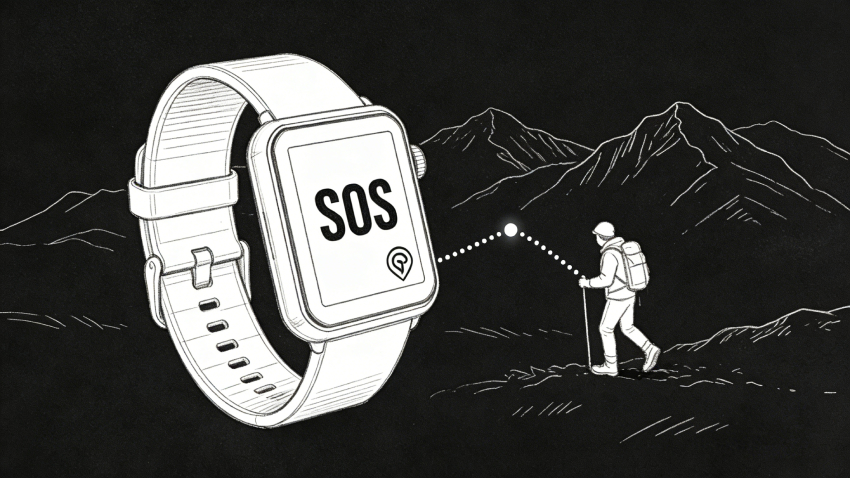
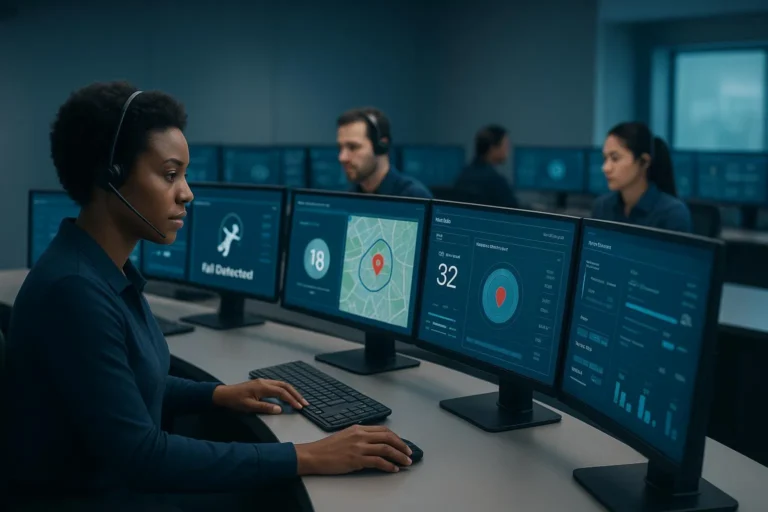
While cloud systems enable scalable storage, edge nodes located in facilities handle immediate SOS and fall alerts to minimize latency.
Interoperability Example
In a 2025 Eview IoT pilot, a 300-bed senior facility integrated LTE-M trackers with its internal care management software.
Result: response times dropped 47%, and fall incidents were verified in under 30 seconds.
Dementia-Focused GPS Tracking Systems
Nearly 60% of dementia patients experience wandering, per the Alzheimer’s Association 2024.
Enterprise-grade trackers mitigate this through AI-based behavioral analytics.
Core Capabilities
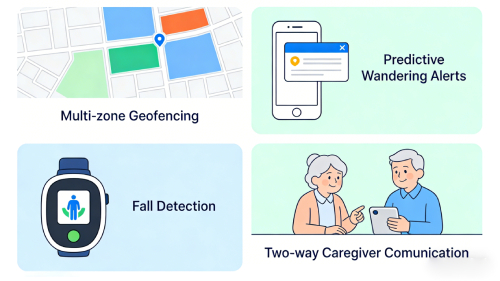
- Multi-zone geofencing with dynamic thresholds
- Predictive wandering alerts
- Fall detection via accelerometer + gyroscope fusion
- Two-way caregiver communication
- Location playback for post-incident review
Deployment Example: Ontario ElderCare Network 2025 reduced wandering-related search events by 38% using BLE-assisted GPS wearables.
Evaluation Metrics for B2B Procurement
| Metric | Description | Recommended Standard |
|---|---|---|
| Accuracy | Outdoor position deviation | ≤ 5 m |
| Data Latency | Time from event to alert | ≤ 2 s |
| Battery Life | Full-charge runtime | ≥ 48 h |
| API Integration | EHR / IoT Hub compatibility | 90 %+ |
| Security Compliance | HIPAA / GDPR / ISO 27001 | Mandatory |
| Device Uptime | SLA availability | ≥ 99.5 % |
Top Enterprise GPS Trackers for the Elderly (2026 Comparison)
| Device | Target Segment | Key Strength | Compliance | Monthly SaaS Fee |
|---|---|---|---|---|
| Eview CareTrack Pro 5G | Hospitals & assisted living | 5G edge AI tracking, HIPAA-ready | ✅ HIPAA | $22 |
| AngelSense Enterprise | Dementia units | Live audio + predictive alerts | ✅ HIPAA | $20 |
| Jiobit Enterprise LTE-M | Remote home care | Lightweight, long battery | ✅ GDPR | $14 |
| Theora Connect Health | Clinics/rehab | 2-way call + EHR API bridge | ✅ HIPAA | $25 |
Future Trends — AI, 5G, and Predictive Mobility Analytics
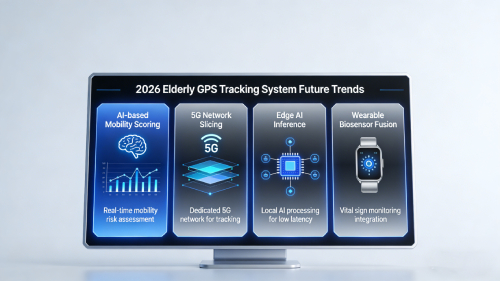
The 2026 roadmap of elderly GPS tracking systems includes:
- AI-based mobility scoring for fall prediction
- 5G network slicing for medical QoS
- Edge AI inference on-device to reduce bandwidth
- Wearable biosensor fusion (heart rate + GPS + motion)
- Sustainability design: recyclable modules & wireless firmware updates
IDC Healthcare IoT 2026 Forecast predicts that 70 % of senior-care facilities will adopt AI-assisted location analytics by 2027.
FAQ — Enterprise GPS Tracking for Elderly Care
Q1. What is the most accurate GPS tracker for elderly care?
Enterprise models using multi-GNSS + LTE-M (e.g., Eview CareTrack Pro) achieve 3–5 m accuracy.
Q2. Are GPS trackers for seniors HIPAA compliant?
Only certified enterprise-grade devices that meet HIPAA and ISO 27001 standards qualify for healthcare use.
Q3. What connectivity is best for medical GPS tracking?
LTE-M and NB-IoT provide the best balance of reliability and low power for hospital-scale deployments.
Q4. How long should the battery last in healthcare environments?
At least 48 hours of active runtime is recommended; some devices offer 5-day standby with adaptive ping algorithms.
Q5. Can GPS trackers integrate with EHR systems?
Yes — via RESTful API or FHIR connectors. Integration enables automatic event logging and mobility records.
Q6. What compliance standards are required for U.S. deployment?
HIPAA, FCC Part 15, and FDA Class II Device Registration are baseline standards for 2026.
Author & Sources
Written by :
Alex Zhang, IoT Systems Architect & Healthcare Integration Consultant, 12 years of experience in GPS sensor networks and elderly care IoT architecture.
Industry Sources Cited:
- World Health Organization (WHO) 2024 Aging Report
- Alzheimer’s Association Dementia Statistics 2024
- GSMA IoT Connections Report 2025
- Gartner Healthcare IoT Forecast 2025
- U.S. FDA Medical Device Classification Guidelines (2024)
- IDC Healthcare IoT Adoption Report 2026