When you look for Smart GPS Tracking Devices, it is important to know the technical details and business factors. These things can greatly affect how well you work and how much money you spend. Think about these points:
- Tracking your fleet can lower fuel costs by watching how drivers act and how vehicles are used.
- Real-time tracking lowers risks and problems, helping your company avoid expensive accidents.
- Information from GPS systems makes operations smoother, boosting productivity and helping your profits.
By paying attention to these parts, you can make smart choices that help your business.
Key Takeaways
- Accurate GPS tracking is very important for managing fleets well. It helps save money and make better choices.
- Think about battery life when picking GPS devices. A longer battery life means less work and better performance.
- Pick the right way to connect based on your needs. Different types have special benefits for your work environment.
- Know the total cost of ownership. This includes hardware, subscriptions, and maintenance to help you budget wisely.
- Choose a trusted vendor. A good vendor provides quality products and strong support, improving your GPS tracking experience.
Technical Factors for Smart GPS Tracking Devices
Accuracy and Precision
Accuracy is very important when picking smart GPS tracking devices for businesses. You need exact location data to make good choices. Wrong tracking can cause problems and higher costs. Here are some standards that show GPS accuracy:
| Standard | Description |
|---|---|
| NSSDA | National Standard for Spatial Data Accuracy, uses RMSE to check position accuracy. |
| CEP | Circular Error Probability, shows the area where 50% of GPS readings are found. |
| DRMS | Distance Root Mean Square, shows the area where 68% of points are found. |
| 2DRMS | Shows the area where 95% of points are found. |
Modern GPS tracking usually gives accuracy within 3-5 meters. Advanced systems can get even better accuracy using RTK correction. Good GPS tracking helps you see your assets, keeps them safe, improves fleet management, and helps you make smart decisions. When you know accurate ETAs and can respond quickly, you keep customers happy and find new business chances.
Battery Life and Power Management
Battery life affects how well GPS tracking devices work. The battery life can be different, lasting from a few days to several months. This depends on how often you use it and what features it has. Here are some important points:
- Long-lasting GPS batteries help save money in operations.
- Less need for battery changes or recharges cuts maintenance costs.
- Better overall efficiency, especially for large operations.
Keep in mind that sending data all the time shortens battery life. On the other hand, using it less often or sending data less frequently can make the battery last longer. By choosing devices with good battery management, you can keep your tracking devices running longer, which helps reduce downtime and improve productivity.
Connectivity Options
Connectivity options are very important for how smart GPS tracking devices work. Different types of connections have their own benefits and downsides. Here’s a look at common connectivity options:
| Connectivity Type | Key Features | Best Use Cases | Considerations |
|---|---|---|---|
| LTE-M | Cost-effective with low data rates; wide coverage; low power use for longer battery life | Urban and suburban fleet tracking; mixed-asset operations | Needs cellular network; may not work in very remote areas |
| Satellite | Global coverage, including oceans and remote areas; works without cell service; very reliable in isolated places | Offshore shipping, mining sites, and remote construction | Higher subscription costs; uses more power than LTE-M |
| BLE (Bluetooth Low Energy) | Short-range tracking within 32.81-328.08 feet; very low power use; fast data transfer in busy areas | Indoor asset tracking; yard and warehouse equipment | Needs BLE gateways; limited to local range |
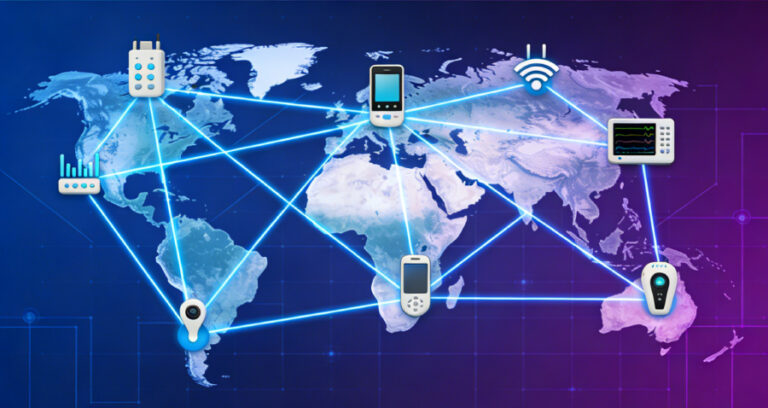
Choosing the right connection type makes sure data is sent reliably. Cellular data works well in cities but may have issues in rural areas. Satellite GPS covers the whole world, making it great for important missions. Wi-Fi can send data fast but relies on local networks.
Scalability and Future-Proofing
Scalability and future-proofing are key when using smart GPS tracking devices. You want solutions that can grow with your business. Here are some features that help with scalability:
| Feature | Description |
|---|---|
| OTA Firmware Updates | Lets devices get updates remotely, keeping them up-to-date with technology changes. |
| Expandable I/O | Allows connecting extra devices like dash cameras or temperature sensors. |
| Software Tiers | Lets you add new features without needing to move data. |
| API Documentation | Shows how easily future workflows can be added. |
| Developer Community Size | Indicates the support and resources available for future improvements. |
By choosing devices with these features, you can adjust to changing market needs and tech advancements. This flexibility helps you stay ahead in your field.
Commercial Considerations for GPS Solutions

Total Cost of Ownership
When you think about getting GPS tracking devices, knowing the total cost of ownership (TCO) is very important. TCO includes all the costs of buying and using the devices during their lifetime. Here are the main parts you should look at:
- The first cost of hardware and installation
- Monthly fees for subscriptions and data services
- Costs for maintenance and support
- Training and upgrade expenses
- Hardware replacement, usually every 3-5 years
By looking at these parts, you can make smart choices that fit your budget and needs. For example, basic plans might cost $15–$20 per vehicle each month, while top plans can go over $50. Hardware prices can start at $39.95 for simple devices and go over $299 for tough ones. Knowing these costs helps you pick the best solution for your business.
Vendor Reputation and Reliability
Choosing a trustworthy vendor is key to making your GPS tracking solution work well. You should check several things to see how good a vendor is:
| Criteria | Description |
|---|---|
| Server Infrastructure | Look at how strong and reliable the vendor’s servers and data centers are. |
| Real-time Performance | See how the system works when it’s busy and during peak times. |
| Historical Data Retention | Think about how well they keep and analyze past data for better fleet management. |
| Integration Capabilities | Check how well the GPS system works with your current business systems. |
| Total Cost of Ownership | Look at all costs related to the system over time, including hardware, setup, and support. |
| Vendor Experience | Research the vendor’s background and experience in GPS tracking. |
| Customer Retention Rates | See how well the vendor keeps its customers, which shows satisfaction and reliability. |
| Support and Training | Look at the support and training the vendor offers to help with successful use. |
A vendor with a good reputation can give you peace of mind. You can trust that they will provide quality products and services that meet your needs.
Support and Maintenance Services
Support and maintenance services are very important for how well your GPS tracking devices work. You should think about the types of services vendors offer:
| Service Type | Description |
|---|---|
| Installation Support | Help with setting up the GPS tracking devices. |
| User-Friendly Software | Software made to be easy to use, improving user experience. |
| Customer Service | Access to chat, phone, or email support with quick response times. |
| Training Options | Different training methods like manuals, videos, and webinars to fit various needs. |
| Alerts for Tampering | Notifications sent by email, text, or app to warn users of any tampering. |
Having clear service level agreements (SLAs) can reduce downtime and ensure quick problem-solving. High uptime guarantees build trust and satisfaction among businesses. Proactive support, like regular updates, helps keep uptime high, making sure your operations run smoothly.
Integration Capabilities
Integration capabilities are key to making sure your GPS tracking devices work well with your current systems. Here are some important integration points to think about:
- GPS tracking systems can connect with maintenance systems.
- Integration with ERP systems is important for smooth workflows.
- Compatibility with customer systems improves efficiency.
- Field service management software can work with ERP and CRM systems for full job visibility.
- Secure data storage is an important part of these integrations.
Choosing a GPS tracking solution with strong integration capabilities can make your operations easier. It helps with better data management and boosts overall productivity.
Challenges in Sourcing GPS Tracking Devices
Market Saturation and Device Selection
Choosing GPS tracking devices can be tough because there are so many options. This makes it hard to find the best one. Here are some common problems you might face:
- Signal Interference: Buildings, trees, and bad weather can block GPS signals. This leads to wrong location data.
- High Battery Consumption: Talking to satellites all the time uses a lot of battery. This is especially true for mobile users.
- Hardware Failures: Older or cheaper devices may have problems like weak connections or setup errors. This affects how reliable they are.
- Privacy Concerns: More people worry about how their location data is collected and used. This means you need strong security measures.
Compliance and Regulatory Considerations
Following the rules is very important in the GPS tracking business. You need to know the laws about using GPS devices. Here are some key rules to think about:
| State Type | Description |
|---|---|
| All-consent states | Need clear permission from drivers before tracking (e.g., CA, MD, NJ, LA, VA). |
| Owner-exception states | No need for employee approval if the company owns the vehicle, but telling them is smart (e.g., IL, MO, TX, OR, PA). |
| Fear-or-harassment clauses | Legal until tracking happens during personal time or feels forced (e.g., CO, ME, MS, WA). |
| Mobile app tracking | Must follow consumer privacy laws (CCPA, DPDPA, Florida Digital Bill of Rights). |
| Data retention | Follow FMCSA rules: keep raw GPS data for at least six months. |
| Policy documentation | A signed policy about “where, when, why” at onboarding helps keep you compliant. |
Knowing these rules helps you avoid legal problems and keeps your GPS solution running well.
Data Security and Privacy Concerns
Keeping data safe and private is very important when using GPS tracking devices. You need to deal with several risks that come with these technologies:
| Risk Type | Description |
|---|---|
| Unauthorized Access | There is a risk that unauthorized people could see sensitive GPS data. |
| Data Theft | Bad actors might steal GPS data, which can lead to privacy issues. |
| Jamming | Blocking GPS signals can stop communication between the device and its systems. |
| Spoofing | Making fake signals can trick tracking systems about where the device really is. |
| Inadequate Data Storage | Weak security for old GPS data could let competitors see sensitive information. |
To reduce these risks, you should use strong cybersecurity practices, train employees regularly, and make sure data is encrypted. These steps help keep sensitive information safe and build trust with users.
In conclusion, when looking for smart GPS tracking devices, you need to think about both technical and business factors. Important technical points are accuracy, battery life, connection options, and how well it can grow with your needs. On the business side, pay attention to the total cost of ownership, the vendor’s reputation, support services, and how well it can connect with other systems.
A balanced way helps you check how well you are buying these devices. This means looking at cost, quality, and long-term goals. By matching your buying plans with your organization’s goals, you can build stronger supplier relationships and improve your business. In the end, this leads to better results in logistics and delivery tracking, making your tracking systems work better.
FAQ
What are GPS tracking devices used for?
GPS tracking devices let you see where assets, vehicles, or people are in real-time. They give important information for managing fleets, keeping people safe, and handling logistics.
How accurate are GPS tracking devices?
Most new GPS tracking devices are accurate within 3-5 meters. Some advanced systems can be even more precise using special technologies like RTK correction.
Can I integrate GPS tracking devices with my existing systems?
Yes, many GPS tracking devices can work with your current software systems. This helps manage data better and makes operations run more smoothly.
How long do the batteries last in GPS tracking devices?
Battery life depends on the device and how you use it. Some devices can last from a few days to several months, based on settings and how often they report.
Are GPS tracking devices secure?
Yes, trusted GPS tracking devices have strong security features. They keep your data safe from unauthorized access and protect your privacy while tracking.