Remote monitoring challenges are one of the biggest concerns for businesses adopting IoT monitoring systems, especially when dealing with connectivity issues, security risks, and system reliability.
Remote monitoring is no longer optional for modern businesses. From industrial IoT to telecare systems, real-time monitoring has become a core operational layer.
But here’s the reality—remote monitoring challenges are often underestimated. Many companies adopt these systems expecting efficiency, only to face unexpected failures, hidden costs, and operational risks.
So the real questions are:
-
Is remote monitoring worth it?
-
What can go wrong?
-
How risky is it for your business?
This guide breaks down the biggest remote monitoring problems, real risks, and how to solve them effectively.
Takeaway: Remote monitoring works—but only when its challenges are designed for from the start.

What Is a Remote Monitoring System (and Why It Fails Without Proper Design)
Before analyzing remote monitoring challenges, it’s important to understand the system itself. Most failures are not caused by tools, but by architecture decisions.
Takeaway: System design determines whether monitoring succeeds or fails.
Core Components
A remote monitoring system includes:
-
IoT sensors or devices
-
Connectivity (Wi-Fi, LTE-M, NB-IoT)
-
Cloud processing platforms
-
Real-time alert dashboards
Protocols like MQTT are widely used to ensure efficient and reliable data transmission.
Why Systems Fail
In real deployments:
-
Weak network design
-
No redundancy
-
Poor device quality
Studies show that over 60% of remote monitoring failures are caused by connectivity issues, making network reliability the most critical factor.
Takeaway: Most failures are predictable and tied to infrastructure decisions.
Top Remote Monitoring Challenges (Overview)
Across industries, remote monitoring challenges tend to follow similar patterns.
Understanding these early allows businesses to avoid common pitfalls.
Takeaway: The biggest monitoring issues are not random—they are recurring.
Key Challenges
-
Connectivity instability
-
Data security risks
-
Device reliability issues
-
Data overload
-
Integration complexity
-
User adoption barriers
Takeaway: A reliable system must address all major failure points, not just one.
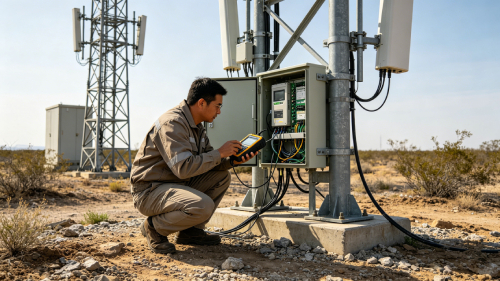
How Often Do Remote Monitoring Systems Fail? (Real Data)
This is where most articles fall short—but this is what decision-makers actually care about.
Takeaway: Understanding failure patterns is key to reducing risk.
Failure Breakdown (Industry Benchmarks)
| Failure Cause | Percentage |
|---|---|
| Connectivity Issues | ~60% |
| Device Failures | ~25% |
| Human Error | ~10% |
| Software Issues | ~5% |
These numbers highlight a clear pattern.
Most failures are not random—they are structural.
What This Means
-
Connectivity is the dominant risk
-
Hardware reliability is second
-
Human error is less critical than expected
Takeaway: Fixing connectivity alone solves the majority of monitoring failures.
IoT Monitoring Challenges: Connectivity and Network Reliability
Connectivity is the most critical IoT monitoring challenge, especially in industrial and remote environments.
Takeaway: Connectivity is the single biggest risk factor.
Why Connectivity Fails
-
Remote deployment environments
-
Network congestion
-
Lack of redundancy
How to Solve It
-
Multi-network redundancy (cellular + LPWAN)
-
Edge computing
-
Failover systems
Technologies such as NB-IoT and LTE-M are increasingly used to improve reliability in large-scale deployments.
Takeaway: Redundant and layered connectivity is essential.
Remote Monitoring Risks: Data Security and Privacy
Security remains one of the most serious remote monitoring risks.
Takeaway: Security failures can have higher impact than system downtime.
Key Risks
-
Data breaches
-
Unauthorized access
-
Weak authentication
Solutions
-
End-to-end encryption
-
Role-based access control
-
Continuous monitoring
According to Deloitte, secure IoT systems can significantly reduce operational risks.
Takeaway: Security must be built into system design, not added later.

Remote Monitoring Problems: Device Reliability
Devices are often overlooked but represent a major failure point.
Takeaway: Hardware quality directly impacts system performance.
Why Devices Fail
-
Battery issues
-
Environmental exposure
-
Hardware degradation
Solutions
-
Industrial-grade devices
-
Remote diagnostics
-
OTA updates
Takeaway: Proactive maintenance prevents system breakdowns.
Challenges of IoT Systems: Data Overload
Too much data is one of the most underestimated remote monitoring problems.
Takeaway: Data without filtering reduces efficiency.
The Problem
-
Excessive raw data
-
Lack of prioritization
The Solution
-
AI-based analytics
-
Smart alert thresholds
-
Clear dashboards
McKinsey reports predictive analytics can reduce downtime by up to 50%.
Takeaway: Data must be refined to create value.
Integration Challenges in Remote Monitoring Systems
Integration is often where projects fail silently.
Takeaway: Poor integration limits system scalability.
Why It Fails
-
Legacy systems
-
API incompatibility
-
Data silos
Solutions
-
Open API systems
-
Standardized data formats
-
Early planning
Takeaway: Integration should be planned before deployment.

User Adoption Challenges
Technology alone is not enough.
Takeaway: User adoption determines real-world success.
Why Adoption Fails
-
Complexity
-
Lack of training
-
Resistance to change
Solutions
-
Simple UX
-
Training programs
-
Automation
Takeaway: Simplicity drives usage.
What Are the Disadvantages of Remote Monitoring?
Beyond benefits, businesses must understand the disadvantages of remote monitoring.
This is critical for decision-making.
Takeaway: Every system has trade-offs that must be managed.
Key Disadvantages
-
Dependence on connectivity
-
Security risks
-
Initial setup cost
-
Integration complexity
When These Become Problems
These disadvantages become critical when systems are poorly designed or deployed without planning.
Takeaway: Disadvantages are manageable with proper design.
Risk Levels in Remote Monitoring Systems
Not all deployments carry the same level of risk.
Takeaway: Risk depends on system complexity and environment.
Risk Classification
Low Risk
-
Small-scale deployments
-
Single-location systems
Medium Risk
-
Multi-site operations
-
Moderate data volume
High Risk
-
Industrial IoT systems
-
Healthcare monitoring
Takeaway: Higher complexity requires stronger system design.
Biggest Mistakes in Remote Monitoring
Most failures are caused by avoidable mistakes.
Takeaway: Avoiding mistakes is faster than fixing failures.
Common Mistakes
-
No network redundancy
-
Poor data filtering
-
Weak integration planning
-
Low-quality hardware
How to Avoid Them
-
Design for failure scenarios
-
Focus on actionable data
-
Invest in scalable systems
Takeaway: Prevention is more effective than correction.
Remote Monitoring vs Traditional Monitoring Challenges
Related: Remote Monitoring vs On-Site Monitoring: Which Is Better?
Takeaway: Remote and traditional monitoring fail in different ways.
| Factor | Remote Monitoring | Traditional Monitoring |
|---|---|---|
| Risk Type | Technical | Human |
| Cost | Lower long-term | Higher |
| Scalability | High | Limited |
Takeaway: Remote monitoring shifts risk from people to systems.
Is Remote Monitoring Worth It?
This is the core decision question behind all remote monitoring challenges.
Takeaway: Value depends on execution quality.
When It Works
-
Large-scale operations
-
Real-time monitoring needs
-
Cost optimization goals
When It Fails
-
Poor system design
-
Weak infrastructure
-
No integration planning
Related future topics:
-
benefits of remote monitoring
-
IoT monitoring systems explained
Takeaway: Success depends on implementation, not technology.
How to Build a Reliable Remote Monitoring System
Learn more: What Is Remote Monitoring? A Complete Guide for Industrial Applications
Takeaway: System design determines long-term ROI.
Best Practices
-
Use scalable IoT systems
-
Implement redundancy
-
Start with pilot deployment
Takeaway: Build small, scale smart.

Conclusion: Are Remote Monitoring Challenges a Deal Breaker?
Remote monitoring challenges are real—but they are not deal breakers.
For most modern businesses, remote monitoring is not just worth it—it is becoming essential for scalability and cost control. However, companies that fail to address connectivity, security, and integration risks often experience system failures and lost ROI. The difference is not the technology, but how it is implemented.
Choosing the right remote monitoring solution is critical—especially in high-risk environments.
Takeaway: Remote monitoring succeeds when challenges are designed into the strategy.
FAQ
What are the biggest remote monitoring challenges?
Connectivity, security, and integration are the most common issues.
What are the disadvantages of remote monitoring?
Dependence on connectivity and security risks.
What causes remote monitoring failure?
Poor infrastructure and lack of redundancy.
How reliable are IoT monitoring systems?
Highly reliable when properly designed.
Is remote monitoring risky?
It can be, but risks are manageable.
Is remote monitoring worth it?
Yes, for most businesses at scale.