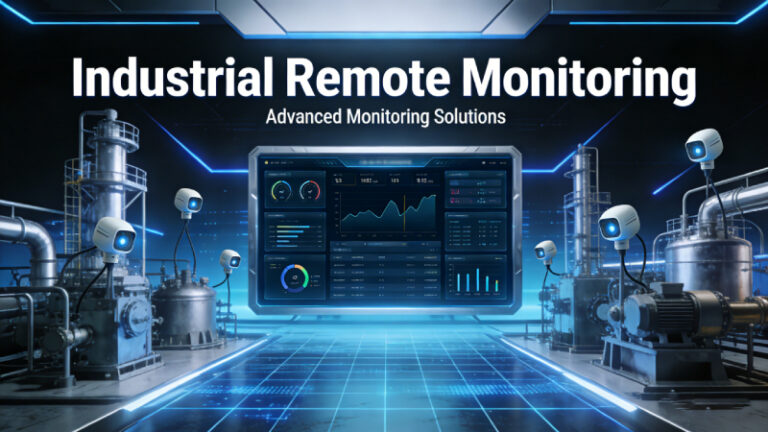
When businesses compare remote vs on-site monitoring, the real concern is not just functionality—it’s cost, efficiency, and long-term scalability.
With the rapid adoption of remote monitoring systems and IoT technologies, traditional monitoring models are being re-evaluated. Still, on-site monitoring remains critical in certain high-risk environments.
So which approach actually delivers better ROI?
Takeaway: For most modern operations, the decision comes down to cost efficiency and scalability.
What Is a Remote Monitoring System?
To fully understand remote vs on-site monitoring, you first need to understand what a remote monitoring system actually includes.
Many businesses treat it as a simple tool, but in practice, it’s a full operational infrastructure.
Takeaway: A remote monitoring system is a complete data-driven ecosystem, not just a device.
Core Components
A typical remote monitoring system includes:
-
Sensors or IoT devices (data collection)
-
Connectivity layer (cellular, Wi-Fi, LPWAN)
-
Cloud platform (data processing)
-
Dashboard or alerts system (user interface)
This architecture enables real-time monitoring systems that operate continuously.
Relationship with IoT Monitoring Systems
Remote monitoring is a key application of IoT monitoring systems.
In industrial environments, IoT sensors collect performance data, while remote platforms analyze and trigger alerts.
According to Deloitte, predictive maintenance enabled by IoT monitoring can reduce maintenance costs by up to 25%.
Takeaway: Remote monitoring systems are a core part of modern IoT infrastructure.
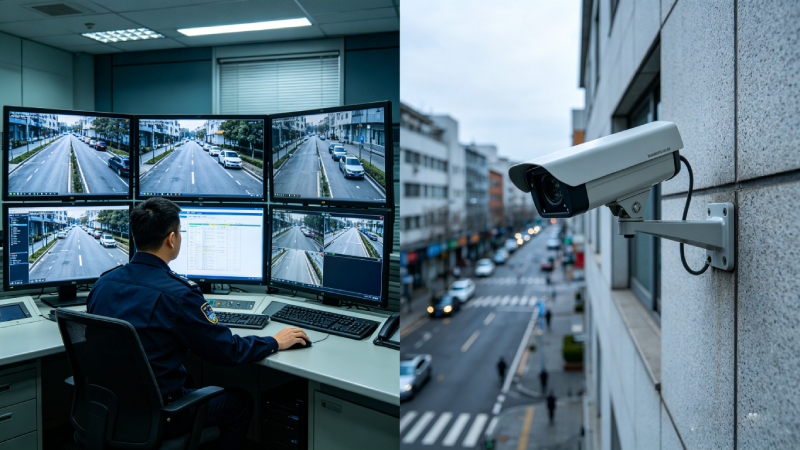
What Is Remote Monitoring?
Once the system layer is clear, it becomes easier to understand remote monitoring in practice.
It’s not just about collecting data—it’s about turning that data into actionable insights.
Takeaway: Remote monitoring focuses on continuous, real-time decision support.
How Remote Monitoring Works
Remote monitoring uses connected devices to track assets, environments, or individuals in real time.
Alerts are triggered automatically when thresholds are exceeded.
This enables real-time monitoring solutions that reduce manual intervention.
Common Applications
-
Remote asset monitoring systems in manufacturing
-
Telecare monitoring solutions (mPERS, SOS devices)
-
Environmental monitoring
-
Lone worker safety
Takeaway: Remote monitoring is designed for scale and continuous visibility.
What Is On-Site Monitoring?
In a balanced monitoring comparison, on-site monitoring still plays a critical role.
It is particularly relevant in environments where physical verification is mandatory.
Takeaway: On-site monitoring remains essential for direct inspection and compliance.
How It Works
On-site monitoring involves personnel physically inspecting systems or environments.
It relies on human observation rather than automated systems.
Typical Use Cases
-
Manufacturing quality control
-
Clinical trials
-
Security monitoring
-
Equipment inspections
Takeaway: On-site monitoring is strongest in high-control environments.

Remote vs On-Site Monitoring: Key Differences
When comparing remote vs on-site monitoring, the differences directly impact operational performance.
A deeper monitoring comparison reveals where each model excels.
Takeaway: The differences go beyond technology—they affect business outcomes.
Advanced Comparison Table
| Factor | Remote Monitoring | On-Site Monitoring |
|---|---|---|
| Presence | Virtual | Physical |
| Initial Cost | Medium | Low |
| Long-Term Cost | Low | High |
| Response Time | Instant | Delayed |
| Scalability | High | Limited |
| Maintenance Cost | Lower | Higher |
| ROI Timeline | 6–12 months | Continuous cost |
| Downtime Risk | Lower | Higher |
| Flexibility | High | Low |
(Source: industry data and IoT monitoring benchmarks)
Expert Insight
In most industrial environments, remote monitoring systems reduce unplanned downtime by 30–50%, making them significantly more cost-effective over a 12-month period.
That’s why many companies are shifting away from purely on-site models.
Takeaway: Remote monitoring delivers measurable efficiency gains.
Remote vs On-Site Monitoring: Cost Comparison (ROI Breakdown)
For decision-makers, the biggest question in remote vs on-site monitoring is ROI.
This is where remote monitoring often outperforms traditional methods.
Takeaway: Cost structure is the key decision driver.
Cost Breakdown
| Cost Type | Remote Monitoring | On-Site Monitoring |
|---|---|---|
| Staffing | Low | High |
| Travel | None | High |
| Infrastructure | Medium | Medium |
| Maintenance | Low | High |
| Downtime Loss | Reduced | Higher |
ROI Example
Industrial case:
-
Before: monthly manual inspections
-
After: remote asset monitoring system
-
Result: 35–40% downtime reduction
According to McKinsey, predictive maintenance can reduce downtime by up to 50%.
Takeaway: Remote monitoring systems deliver faster and more predictable ROI.

Benefits of Remote Monitoring
The advantages of remote monitoring solutions go beyond cost savings.
They fundamentally change how operations are managed.
Takeaway: Remote monitoring improves efficiency, scalability, and responsiveness.
Lower Operational Costs
Reduced labor and travel expenses significantly lower long-term costs.
Real-Time Monitoring
Instant alerts enable faster response and risk reduction.
Scalability
Remote systems support multi-site operations without proportional cost increases.
Takeaway: Remote monitoring enables efficient scaling.
Benefits of On-Site Monitoring
Despite digital transformation, on-site monitoring still provides value in specific scenarios.
A complete monitoring comparison must reflect that.
Takeaway: On-site monitoring offers control where automation falls short.
Direct Inspection
Immediate physical verification improves accuracy.
Compliance
Regulatory requirements often require on-site validation.
Takeaway: On-site monitoring supports compliance and control.
Real-World Use Cases
Understanding remote monitoring systems is easier through real-world applications.
These examples highlight measurable impact.
Takeaway: Practical results show where each model works best.
Case: Industrial Monitoring
-
Before: manual inspections
-
After: IoT-based remote monitoring system
-
Result: 35% downtime reduction
Case: Telecare Monitoring
Using mPERS devices for remote monitoring:
-
Faster emergency response
-
Improved user safety
Takeaway: Remote monitoring improves both efficiency and safety.
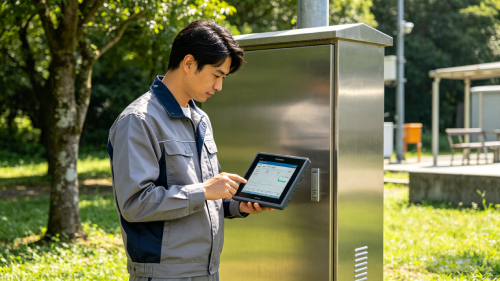
Which Should You Choose?
Choosing between remote vs on-site monitoring requires aligning with business priorities.
This is where many decisions become clearer.
Takeaway: The best choice depends on operational goals.
Choose Remote Monitoring If
-
You need real-time monitoring
-
You operate across multiple locations
-
Cost efficiency is critical
Choose On-Site Monitoring If
-
Physical inspection is required
-
Compliance demands presence
-
Systems are highly sensitive
Best Strategy: Hybrid Monitoring
Most organizations combine both approaches.
Takeaway: Hybrid monitoring delivers the best balance of efficiency and control.
Why Remote Monitoring Is Replacing Traditional Models
The shift toward remote monitoring systems is accelerating.
Key drivers include:
-
Rising labor costs
-
Growth of IoT monitoring systems
-
Demand for real-time monitoring
-
Predictive maintenance technologies
These trends are reshaping industries.
Takeaway: Remote monitoring is becoming the default model in many sectors.
How Eview Supports Remote Monitoring Solutions
As businesses adopt remote monitoring systems, reliable implementation becomes critical.
Shenzhen Eview GPS Technology provides telecare monitoring solutions, including mPERS devices and connected platforms.
With OEM/ODM capabilities, Eview supports customized remote monitoring solutions for global partners。
Related topics:
-
remote asset monitoring
-
telecare monitoring solutions
-
IoT monitoring systems
Takeaway: Customized solutions enable effective deployment of remote monitoring.
Conclusion: Which Is Better?
For most modern businesses, remote monitoring is the more cost-effective and scalable solution.
However, on-site monitoring remains essential in compliance-driven or high-risk environments.
In practice, organizations that adopt a hybrid monitoring strategy achieve the best overall performance.
Takeaway: Remote monitoring leads in efficiency, but hybrid models deliver the strongest results.

FAQ
What is the difference between remote monitoring and IoT monitoring?
IoT monitoring refers to connected devices, while remote monitoring uses that data for real-time oversight.
Is remote monitoring suitable for small businesses?
Yes, scalable solutions make it accessible for smaller operations.
What are the disadvantages of remote monitoring?
Security risks and dependence on connectivity.
Is remote monitoring better than on-site monitoring?
It is more scalable, but on-site is needed for physical verification.
What industries benefit most from remote monitoring?
Healthcare, manufacturing, logistics, and telecare.
How secure are remote monitoring systems?
With proper encryption, they can be highly secure.
What Is Remote Monitoring? A Complete Guide for Industrial Applications