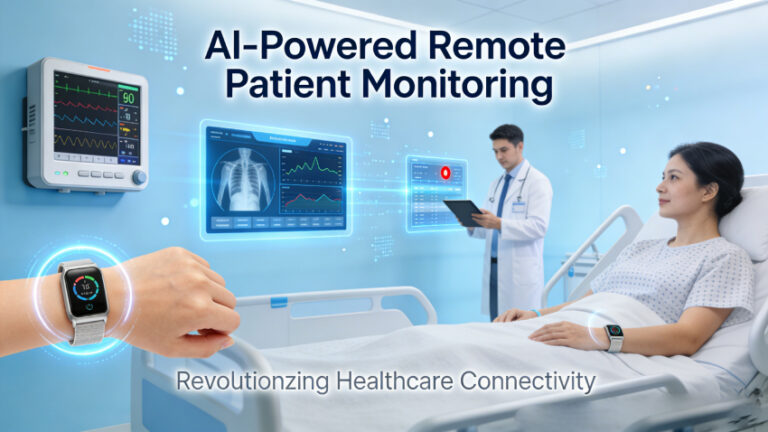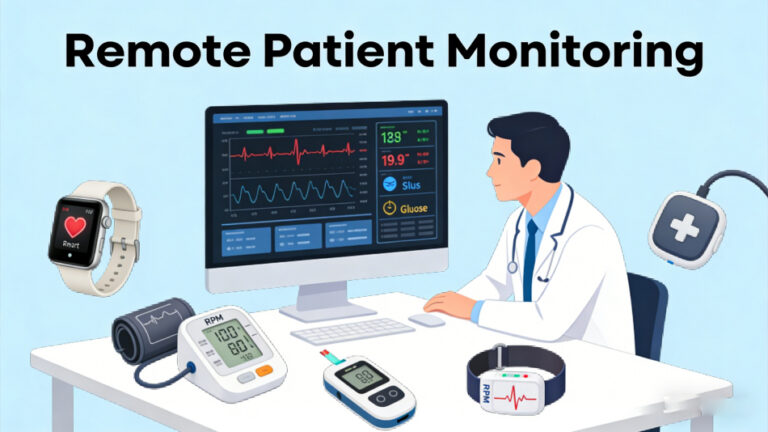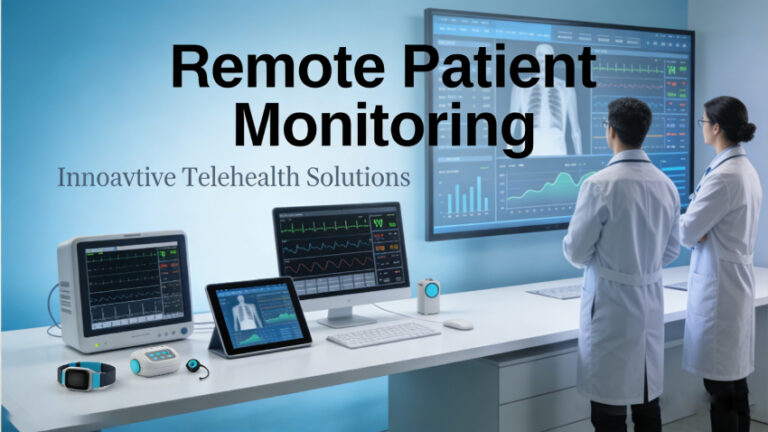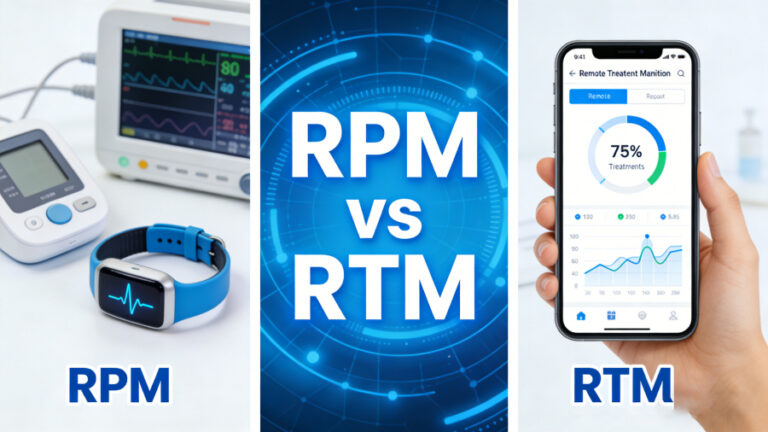
Digital healthcare is no longer a single solution—it’s a layered ecosystem.
Yet many providers still confuse remote patient monitoring (RPM), telehealth, and mHealth, leading to poor implementation decisions and wasted investment.
This guide introduces a clear decision framework, real-world use cases, and practical insights to help you choose the right approach.
Understanding the differences between RPM vs Telehealth vs mHealth is essential for healthcare providers navigating digital health solutions. While these terms are often used interchangeably, they represent very different approaches to patient care, data monitoring, and engagement.
Quick Answer (Featured Snippet Target)
RPM focuses on continuous patient data monitoring, telehealth enables remote consultations, and mHealth supports mobile-based health tracking and engagement.
Digital Health Stack Framework (Original Model)
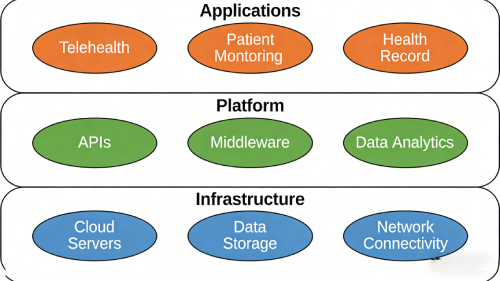
To truly understand the difference, think of digital health as a 3-layer system:
Layer 1: Data Layer → RPM
Continuous collection of clinical data using connected devices
Layer 2: Care Delivery Layer → Telehealth
Real-time interaction between patients and providers
Layer 3: Engagement Layer → mHealth
Patient-driven health tracking and behavior management
This Digital Health Stack Framework helps clarify how these technologies work together—not compete.
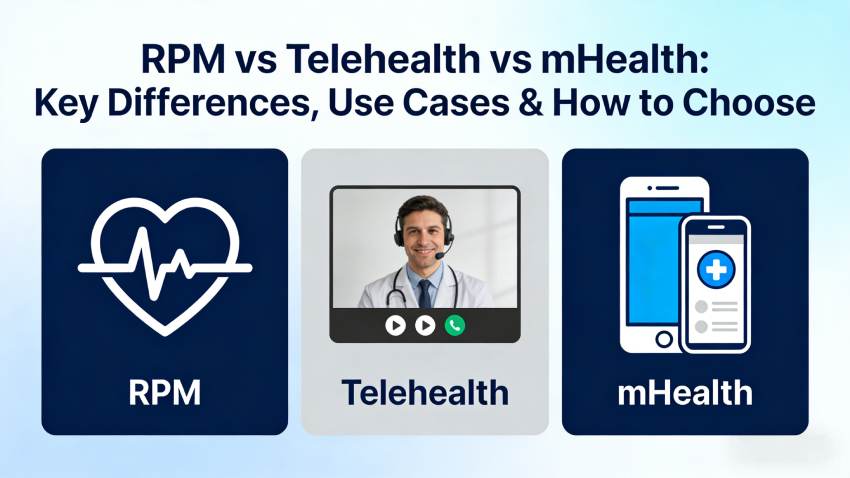
What Is RPM vs Telehealth vs mHealth? (Simple Definitions)
RPM
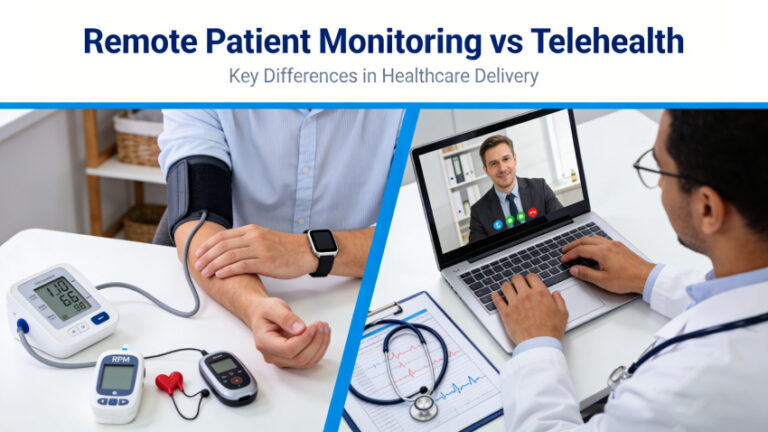
Remote Patient Monitoring (RPM) is the continuous collection of patient health data using connected medical devices.
Telehealth
Telehealth is the delivery of healthcare services remotely through video, phone, or messaging.
mHealth
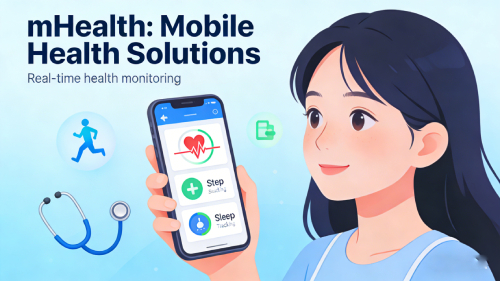
mHealth refers to mobile apps and wearable technologies used for health tracking and engagement.
What Is the Difference Between RPM and Telehealth?
The key difference between remote patient monitoring and telehealth is:
-
RPM collects continuous data passively
-
Telehealth involves active communication sessions
RPM is asynchronous and data-driven, while telehealth is real-time and interaction-based.
Why These Terms Are Often Confused
-
All are part of digital health
-
They are often used interchangeably in marketing
-
Many platforms combine all three features
But understanding their differences is critical for correct implementation.
RPM vs Telehealth vs mHealth: Side-by-Side Comparison
| Factor | RPM | Telehealth | mHealth |
|---|---|---|---|
| Core Function | Monitoring | Consultation | Engagement |
| Best Use Case | Chronic care | Acute visits | Lifestyle |
| Cost Level | High | Medium | Low |
| ROI Potential | High (long-term) | Medium | Variable |
| Implementation | Complex | Moderate | Easy |
This comparison targets “which is better” and “comparison” queries directly.
Key Differences Between RPM, Telehealth, and mHealth
-
RPM provides continuous clinical data
-
Telehealth enables real-time consultations
-
mHealth supports self-managed health tracking
-
RPM uses medical-grade devices; mHealth does not
-
Telehealth depends on communication platforms
This bullet structure improves Featured Snippet capture.
What Is Remote Patient Monitoring (RPM)?
RPM enables providers to monitor patients remotely using connected medical devices.
Devices Used in RPM
-
Blood pressure monitors
-
Glucose meters
-
Pulse oximeters
Clinical Evidence
According to the National Institutes of Health (NIH), RPM significantly improves chronic disease outcomes.
A study published in JAMA found RPM reduced hospital readmissions by over 20% in high-risk patients.
What Is Telehealth?
Telehealth allows providers to deliver care remotely via digital communication.
Use Cases
-
Virtual doctor visits
-
Mental health therapy
-
Follow-ups
Telehealth vs Virtual Care
Telehealth and virtual care are often used interchangeably, but telehealth is the more formal healthcare term.
What Is mHealth?
mHealth focuses on mobile-driven healthcare solutions.
Examples
-
Fitness apps
-
Mental health apps
-
Wearable tracking tools
Real Use Cases: RPM vs Telehealth vs mHealth
RPM for Chronic Disease Management
-
Diabetes monitoring
-
Hypertension tracking
-
Cardiac care
Telehealth for Remote Consultations
-
Primary care
-
Specialist access
-
Behavioral health
mHealth for Preventive Care
-
Fitness tracking
-
Diet monitoring
-
Medication adherence
How to Choose Between RPM, Telehealth, and mHealth
Choose RPM if:
-
You need continuous monitoring
-
You manage chronic conditions
-
You want Medicare reimbursement
Choose Telehealth if:
-
You need remote consultations
-
You want scalable care delivery
Choose mHealth if:
-
You want user engagement tools
-
You focus on preventive health
RPM vs Telehealth Cost Comparison
RPM Costs
-
Devices: $50–$200 per patient
-
Software platforms
-
Monitoring staff
Telehealth Costs
-
Subscription-based platforms
-
Minimal hardware
RPM has a higher upfront cost but delivers a strong ROI in chronic care programs.
Implementation Complexity Comparison
RPM
High complexity: requires devices, integration, and workflows
Telehealth
Moderate complexity: platform setup and provider training
mHealth
Low complexity: app-based deployment
When RPM Is NOT the Right Choice
This is a critical but often ignored factor.
RPM may NOT be suitable when:
-
Patients have low compliance
-
Short-term care is needed
-
The budget is limited
-
Infrastructure is lacking
RPM Software & Platform Considerations
When choosing an RPM platform, evaluate:
Key Factors
-
EHR integration
-
HIPAA compliance
-
Device compatibility
-
Data analytics capabilities
Decision Tree (High Engagement Element)
Do you need continuous monitoring?
-
Yes → RPM
-
No → Need real-time care?
-
Yes → Telehealth
-
No → mHealth
-
Industry Trends: Digital Health in 2026
-
AI-powered RPM systems
-
Growth of wearable health tech
-
Shift toward value-based care
According to McKinsey, digital health adoption has increased by over 38%, with RPM leading innovation.

FAQ (Expanded for SERP Coverage)
What is the difference between telehealth and virtual care?
Telehealth is a broader term, while virtual care is often used interchangeably but is less formal.
Is RPM considered telemedicine?
RPM is part of telehealth, not strictly telemedicine.
What is the cost of RPM per patient?
Typically ranges from $50 to $200 per patient per month depending on devices and services.
Are RPM devices FDA-approved?
Many RPM devices are FDA-approved, especially those used for clinical monitoring.
Is RPM part of telehealth?
Yes, RPM is a subset of telehealth focused on data monitoring.
Conclusion
RPM, Telehealth, and mHealth are not competing technologies—they represent different layers of modern healthcare.
-
RPM = data infrastructure
-
Telehealth = care delivery
-
mHealth = engagement layer
The most effective healthcare systems integrate all three.
If you’re planning to implement RPM, understanding reimbursement and compliance is essential.
Read our full guide to remote patient monitoring CPT codes and reimbursement to maximize your ROI.