In today’s connected world, companies in healthcare, logistics, security, and manufacturing rely heavily on GPS-enabled devices to ensure personnel and asset safety.
Two of the most discussed options are the SOS smartwatch and the traditional GPS tracker.
While both use location-based technology, they serve different purposes.
Understanding the difference between an SOS watch and a GPS tracker will help businesses choose the right solution for employee safety, operational visibility, and long-term efficiency.
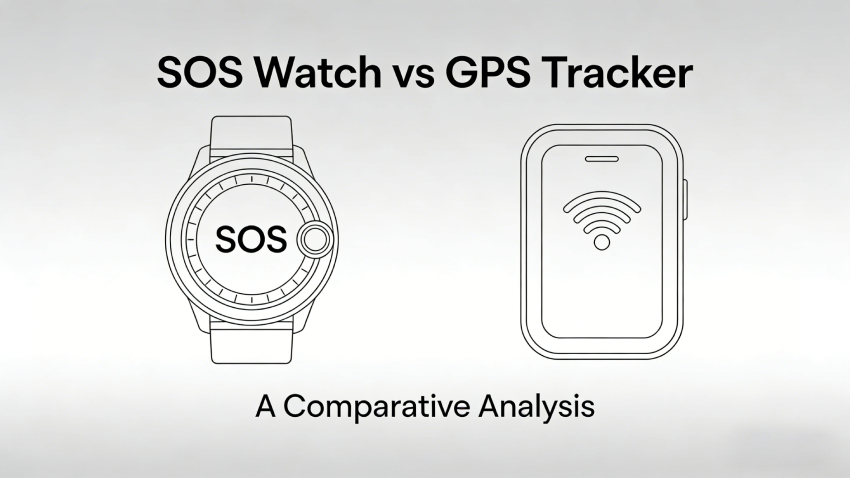
What Is an SOS Watch?
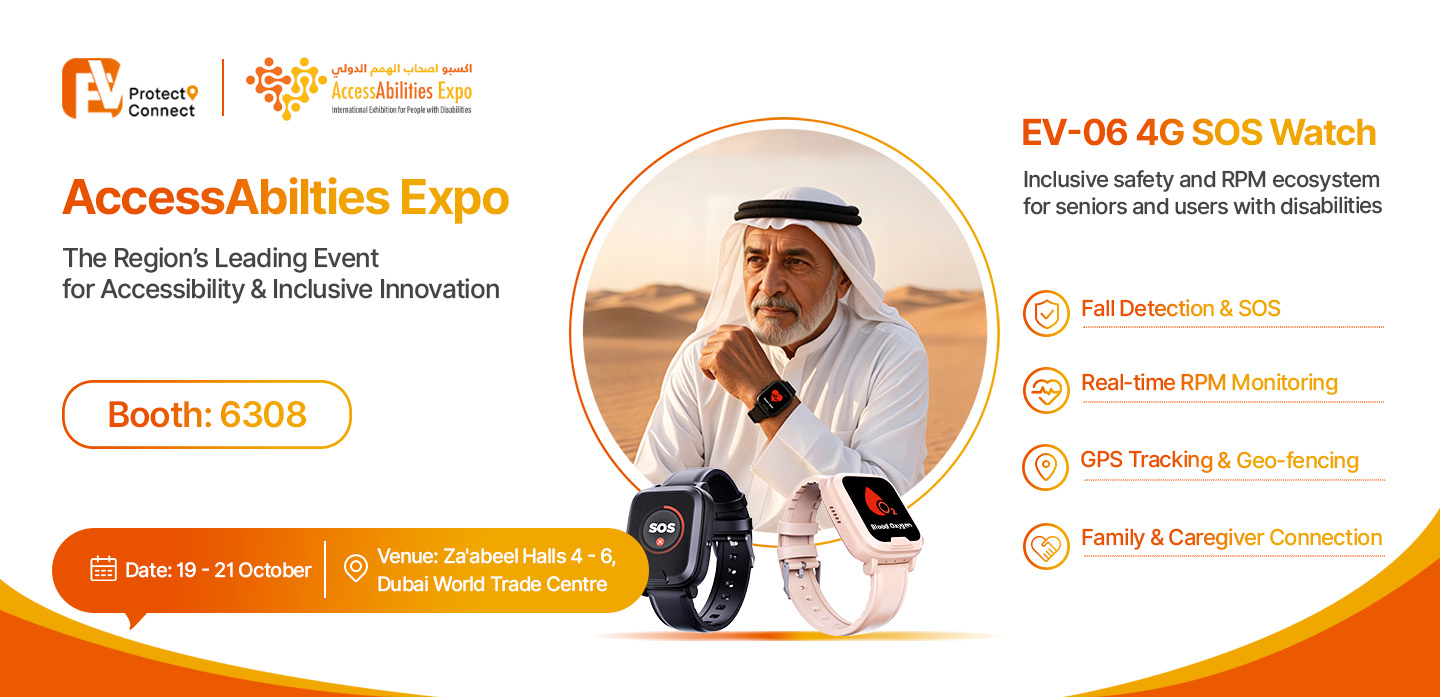
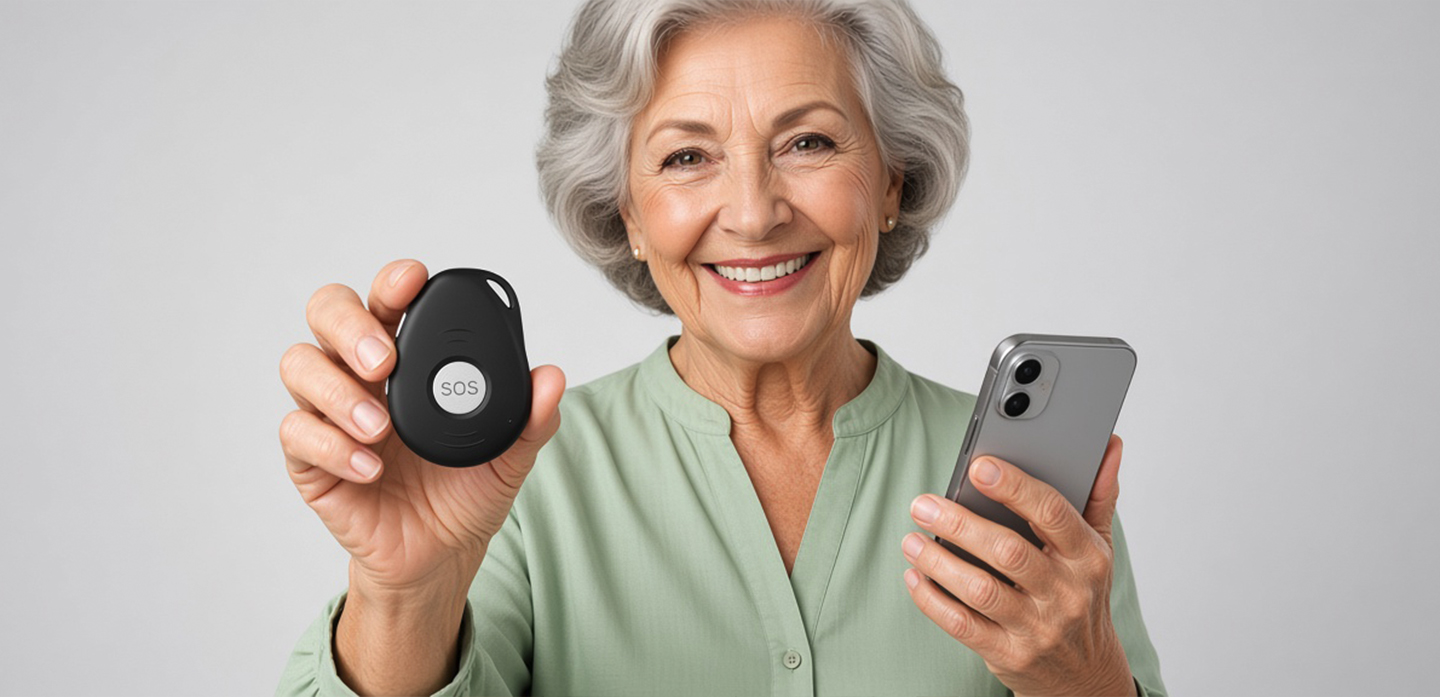
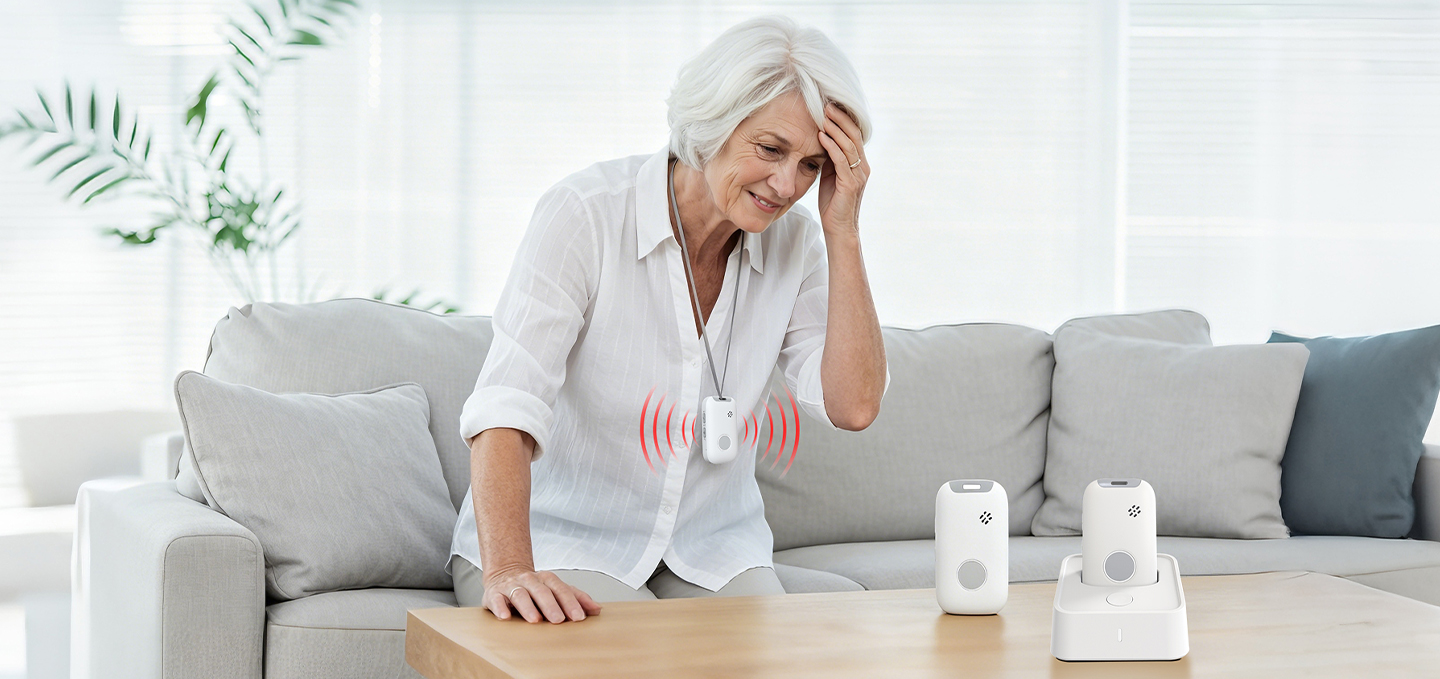
An SOS watch—also known as a personal emergency response smartwatch (mPERS)—is a wearable IoT device designed for real-time emergency alerts and two-way communication.
Key Features:
- SOS Button: One-touch distress call to caregivers or a monitoring center.
- Two-Way Voice Communication: Functions as a mini phone for emergency contact.
- GPS + Cellular (4G/5G): Real-time positioning and instant data transmission.
- Health & Safety Sensors: Fall detection, heart rate, and movement monitoring.
- Mobile Management Platform: Allows businesses or caregivers to track and manage devices remotely.
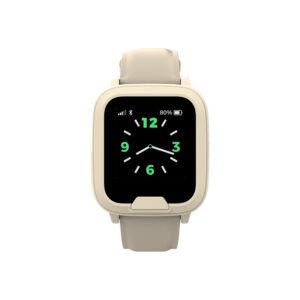
Elderly care, lone workers, healthcare personnel, field technicians, and employees working in high-risk environments.
What Is a Traditional GPS Tracker?
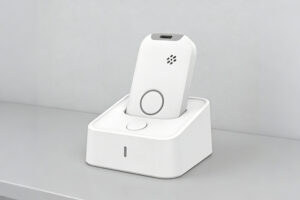
A GPS tracker focuses purely on location tracking and route recording, not voice communication.
It collects, stores, and transmits location data through GPS, GNSS, or LTE networks, typically for assets or vehicles.
Common Features:
- Real-Time or Interval Tracking (seconds to hours)
- Geo-Fencing & Alert Notifications
- SIM or LPWAN Connectivity (NB-IoT, LTE-M)
- Long Battery Life (5–14+ days)
- Compact, Rugged Design (IP67/IP68 waterproofing)
Fleet management, logistics, asset tracking, pet tracking, and field equipment monitoring.
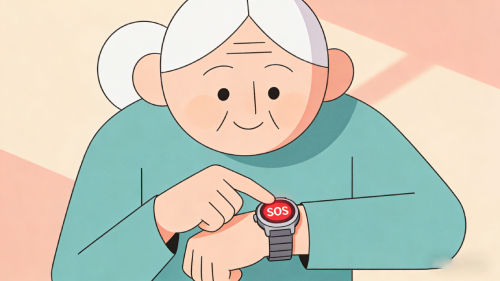
SOS Watch vs GPS Tracker: Feature Comparison
| Feature | SOS Watch | GPS Tracker |
|---|---|---|
| Primary Purpose | Emergency alerts & communication | Continuous tracking |
| SOS Button | ✅ Built-in | ⚠️ Some models only |
| Voice Call Support | ✅ Two-way talk | ❌ No |
| Health Monitoring | ✅ Yes (advanced models) | ❌ No |
| Battery Life | 1–3 days | 5–14+ days |
| Subscription | Required (SIM + monitoring) | Optional |
| Best For | People safety, lone workers | Assets, vehicles, logistics |
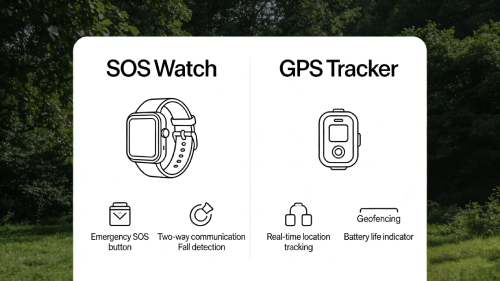
Key Technical Differences
Connectivity and Communication
- SOS Watch: Uses cellular (4G/5G) + GPS; supports SOS calls, SMS, and live tracking.
- GPS Tracker: Uses GSM/LTE or LPWAN; transmits coordinates silently to a dashboard.
Accuracy and Tracking Frequency
Both rely on multi-satellite systems (GPS, GLONASS, Beidou) for precise tracking.
SOS watches send frequent updates during emergencies; trackers can be set for periodic updates to save power.
Typical accuracy: 1–10 meters outdoors; Wi-Fi or cell triangulation indoors.
Battery and Reliability
- SOS Watch: Prioritizes responsiveness → shorter battery life (1–3 days).
- GPS Tracker: Optimized for longevity → up to two weeks or more.
Use Cases for Businesses (B2B Applications)
1. Employee & Lone Worker Safety
Industries like security, construction, or field service need real-time SOS alerts and two-way voice for worker protection.
→ Best device: SOS Watch
2. Fleet Management & Logistics
Businesses monitoring vehicles or delivery assets rely on long-lasting trackers with route playback and geofencing.
→ Best device: GPS Tracker
3. Asset & Equipment Monitoring
For high-value equipment or rental assets, GPS trackers provide non-intrusive, long-term tracking.
→ Best device: GPS Tracker
4. Healthcare & Senior Monitoring
Hospitals or care facilities use SOS watches to ensure continuous patient safety and remote monitoring.
→ Best device: SOS Watch
Data Security & Compliance (Critical for B2B Buyers)
When selecting an IoT tracking device, ensure it meets modern data protection standards:
- Encrypted Transmission: HTTPS / AES-256
- User Permission Controls
- GDPR / HIPAA Compliance (for EU or healthcare applications)
- Regular Firmware Updates
Partner with OEM/OEM suppliers that prioritize cybersecurity and device reliability.
Pricing & Subscription Comparison
| Cost Element | SOS Watch | GPS Tracker |
|---|---|---|
| Device Price | $100–$250 | $30–$150 |
| Monthly Plan | $10–$30 (cellular + monitoring) | $0–$10 (data only) |
| Monitoring Service | 24/7 live response (optional) | Self-managed |
| Best For | Care, safety, workforce protection | Logistics, fleet, assets |
B2B Procurement & Integration Considerations
When sourcing IoT safety or tracking devices, enterprise buyers should evaluate:
- OEM/ODM Capability – Custom firmware or hardware branding
- API & Cloud Platform Integration – For ERP, CRM, or fleet software
- After-Sales & Global Support – Critical for large-scale deployments
- Regulatory Certification – CE, FCC, RoHS for compliance
If you’re an enterprise integrator, consider partnering with OEMs offering hybrid mPERS trackers—combining both SOS and GPS features.
FAQs (for Google’s People Also Ask Optimization)
Q1: Can a GPS tracker send an SOS alert?
Some advanced GPS trackers include an SOS button, but most lack voice communication.
Q2: Do SOS watches work indoors?
Performance varies; A-GPS and Wi-Fi positioning improve indoor accuracy.
Q3: Which device lasts longer?
GPS trackers typically offer 2–4x longer battery life than SOS watches.
Q4: Can companies manage multiple devices?
Yes. Enterprise dashboards allow real-time fleet or employee management.
Q5: What’s the best solution for employee safety?
A 4G SOS smartwatch with fall detection and monitoring service.
Final Thoughts: Which Device Is Right for Your Business?
| Business Need | Recommended Device |
|---|---|
| Employee or lone worker safety | SOS Watch |
| Fleet and vehicle tracking | GPS Tracker |
| Asset & equipment tracking | GPS Tracker |
| Healthcare and elderly care | SOS Watch |
| Integrated enterprise monitoring | Hybrid IoT solution |
Bottom Line:
Choose an SOS Watch for people’s safety and emergency communication.
Choose a GPS Tracker for silent, long-term location tracking.
For B2B integrators, consider OEM hybrid solutions that merge both functionalities.
Call-to-Action (B2B Inquiry Conversion)
Looking for an enterprise-ready SOS watch or GPS tracking solution?
Contact our team for OEM/ODM partnerships, product demos, or bulk pricing: Contact EviewConnect