Published: March 2026
Last Updated: March 2026
Reviewed by healthcare AI specialists in remote patient monitoring systems
Remote patient monitoring (RPM) is no longer just a digital convenience—it is becoming a foundational part of modern healthcare delivery. With the integration of artificial intelligence, AI in remote patient monitoring (AI RPM) is transforming how providers monitor, predict, and manage patient health.
AI remote patient monitoring (AI RPM) is a healthcare technology that uses artificial intelligence to analyze patient data collected from remote devices, enabling real-time monitoring, predictive insights, and personalized care outside traditional clinical settings.
Today, AI-driven remote patient monitoring is powering a new generation of intelligent patient monitoring systems, enabling proactive and data-driven healthcare.
What Is AI Remote Patient Monitoring and How It Works
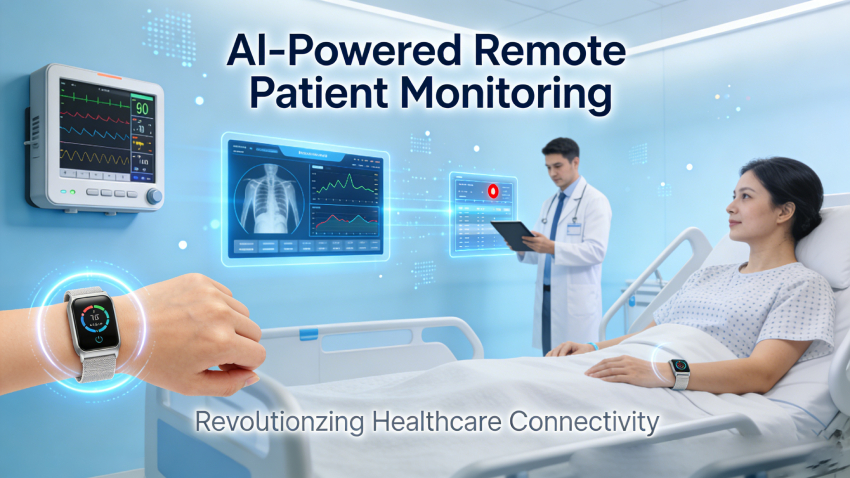
AI RPM combines connected medical devices with advanced analytics to create smart healthcare monitoring systems.
Unlike traditional monitoring, which focuses on data collection, AI RPM solutions transform data into actionable insights.
How AI RPM Solutions Work in Healthcare
AI-powered systems collect patient data from:
-
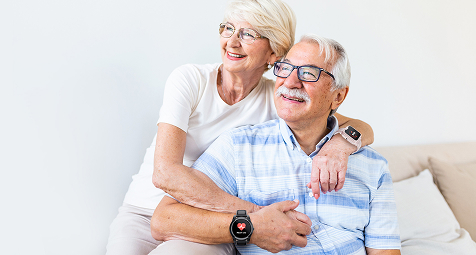
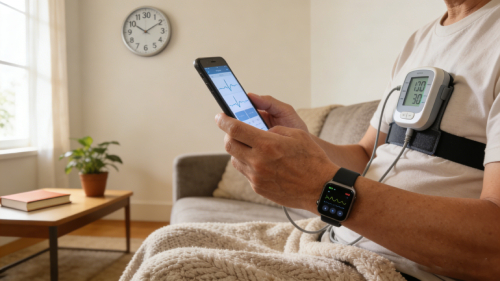
Wearable devices (smartwatches, biosensors)
-
Home-based monitoring tools
-
Mobile health applications
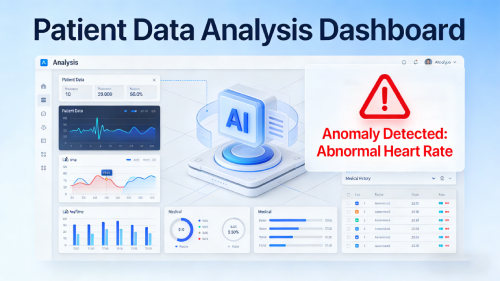
Then, AI-powered remote patient monitoring systems use machine learning algorithms to continuously analyze patient data and deliver predictive healthcare insights.
These systems:
-
Detect abnormalities in real time
-
Trigger alerts automatically
-
Prioritize high-risk patients
-
Support clinical decision-making
According to HIMSS, AI-enabled RPM improves patient engagement and reduces care gaps, making it a key component of digital health monitoring AI ecosystems.
AI Remote Patient Monitoring vs Telehealth vs Traditional Monitoring
Understanding the difference between these models is essential for both providers and decision-makers.
| Feature | Traditional Monitoring | Telehealth | AI-powered RPM | Impact |
|---|---|---|---|---|
| Data collection | Manual | Limited | Continuous | Better insights |
| Interaction | In-person | Virtual | Automated + virtual | Hybrid care |
| Risk detection | Reactive | Reactive | Predictive | Earlier intervention |
| Scalability | Low | Medium | High | Cost efficiency |
| Personalization | Limited | Moderate | Advanced | Better outcomes |
How Does AI Improve Remote Patient Monitoring?
AI improves remote patient monitoring by:
-
Enabling real-time data analysis
-
Predicting health risks early
-
Automating alerts and interventions
-
Personalizing patient care
-
Reducing hospital readmissions
AI Predictive Analytics in Healthcare Monitoring
AI uses predictive analytics to:
-
Forecast disease progression
-
Identify high-risk patients
-
Prevent complications
According to McKinsey, AI-driven healthcare solutions can reduce costs by up to 20% while improving care efficiency.
Machine Learning in RPM Systems
Machine learning enables:
-
Continuous system improvement
-
Adaptive patient monitoring
-
Personalized thresholds
This forms the backbone of AI clinical decision support systems.
Key Benefits of AI in Healthcare Monitoring
AI brings measurable improvements across patient outcomes and operational efficiency.
Early Detection and Preventive Care
Studies show that RPM programs can reduce hospital readmissions by up to 38%, especially when combined with AI.
AI detects:
-
Cardiac irregularities
-
Oxygen level changes
-
Glucose fluctuations
Personalized Patient Care
AI delivers:
-
Tailored treatment plans
-
Behavior-based recommendations
-
Continuous care adjustments
Reduced Hospital Readmissions
AI RPM helps providers intervene earlier, significantly reducing avoidable hospitalizations.
Improved Clinical Efficiency
AI reduces workload by automating:
-
Data analysis
-
Patient prioritization
-
Monitoring workflows
Lower Healthcare Costs
AI reduces costs by:
-
Preventing emergencies
-
Minimizing hospital stays
-
Optimizing staff resources
Real-World Example of AI RPM Implementation (Information Gain)
One of the most compelling advantages of AI RPM is its real-world impact.
A U.S.-based hospital implemented an AI-driven remote patient monitoring system for heart failure patients. By continuously tracking patient vitals and using predictive analytics:
-
Hospital readmissions dropped by 25% within 6 months
-
Emergency visits decreased significantly
-
Patient adherence improved due to real-time feedback
This example highlights how intelligent patient monitoring systems can deliver measurable clinical and financial outcomes.
Real-World Use Cases of AI Remote Patient Monitoring
AI for Chronic Disease Monitoring
AI enables continuous monitoring of:
-
Diabetes
-
Hypertension
-
Cardiovascular disease
AI in Post-Surgical Monitoring
AI improves recovery outcomes by detecting complications early.
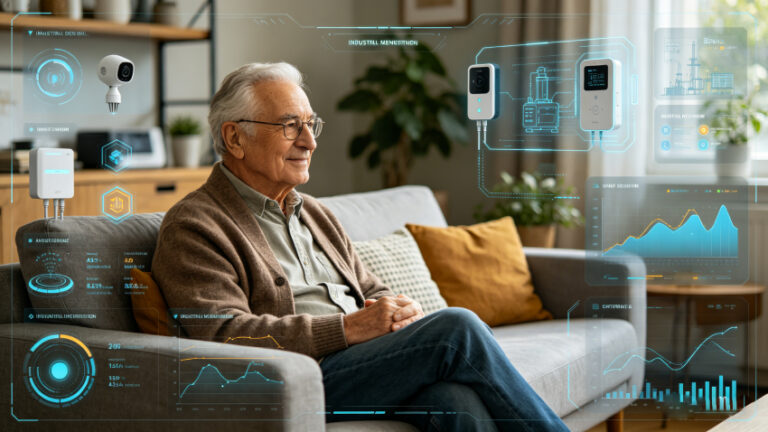
AI for Elderly Care Monitoring
AI supports aging populations through:
-
Fall detection
-
Activity monitoring
-
Emergency alerts
AI-Powered Wearable Monitoring
Wearables provide continuous data streams for AI analysis, forming the backbone of smart healthcare monitoring systems.
What Devices Are Used in AI Remote Patient Monitoring?
Common devices include:
-
Smartwatches
-
Blood pressure monitors
-
Glucose monitors
-
Pulse oximeters
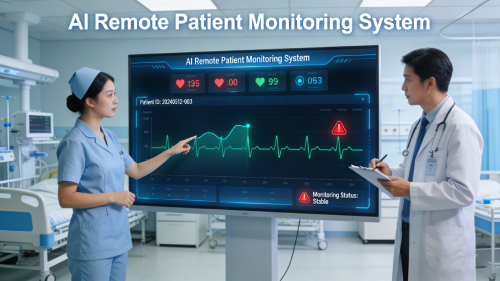
These devices power digital health monitoring AI ecosystems.
Who Should Use AI Remote Patient Monitoring?
Hospitals and Health Systems
Clinics and Private Practices
Home Care Providers
Digital Health Startups
AI RPM is particularly valuable for organizations seeking scalable care solutions.
ROI of AI Remote Patient Monitoring (Business Value)
Cost Savings
AI reduces healthcare costs by up to 20% (McKinsey).
Readmission Reduction
RPM programs can reduce readmissions by up to 38%.
Operational Efficiency
AI enables providers to monitor more patients without increasing staff.
Technologies Behind AI Healthcare Monitoring
AI RPM relies on:
-
Machine learning
-
Predictive analytics
-
IoT devices
-
NLP
Together, these create AI clinical decision support systems.
Challenges of AI in Remote Patient Monitoring
Data Privacy
Integration
Algorithm Bias
Patient Adoption
These challenges must be addressed for successful implementation.
Internal Linking: Building a Strong RPM Content Ecosystem
To fully understand AI RPM, explore related topics:
-
AI in chronic care management
-
RPM software platforms comparison
-
Wearable healthcare devices in RPM
Learn more about RPM fundamentals and CPT codes:
Remote Patient Monitoring (RPM) in 2026: Benefits, CPT Codes, Reimbursement & Implementation Guide
Future Trends in AI Remote Patient Monitoring
-
Expansion of AI healthcare platforms
-
Growth of preventive care
-
Real-time decision support
-
Telehealth integration
FAQ: AI in Remote Patient Monitoring
What is AI remote patient monitoring?
AI RPM uses artificial intelligence to analyze patient data and enable predictive care.
How does AI improve remote patient monitoring?
AI enables real-time monitoring, predictive insights, and personalized care.
How does AI reduce healthcare costs?
By preventing hospitalizations and improving efficiency.
What devices are used in AI RPM?
Wearables, biosensors, and home monitoring devices.
What is the difference between AI RPM and digital health monitoring?
AI RPM focuses on predictive monitoring, while digital health monitoring includes broader health technologies.
Is AI RPM suitable for small clinics?
Yes, many AI RPM solutions are scalable and designed for clinics of all sizes.
Is AI used in RPM today?
Yes, AI is widely used in modern RPM systems.
Authority & Disclaimer
Written and reviewed by experts in AI healthcare monitoring and digital health systems.
Disclaimer: This article is for informational purposes only and does not constitute medical advice.
Conclusion
AI in remote patient monitoring is redefining healthcare by enabling predictive, personalized, and scalable care. Through AI-driven remote patient monitoring, providers can improve outcomes, reduce costs, and deliver more efficient care.
As adoption continues to grow, organizations that invest in AI healthcare monitoring systems will lead the future of digital healthcare.